

RusselSmith and Ghana Maritime Authority in Discussions to Deploy 3D Manufacturing Solutions Across Ghana’s Maritime Sector
By Trek Africa Newspaper
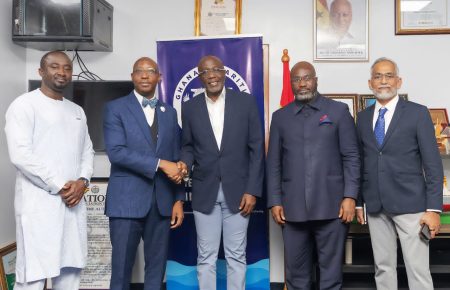
RusselSmith, Nigeria’s leading provider of advanced manufacturing and asset integrity solutions, has confirmed discussions with the Ghana Maritime Authority (GMA) regarding the introduction of the company’s 3D manufacturing capabilities to Ghana’s maritime sector. The growing regional interest in RusselSmith’s advanced manufacturing solutions underscores Nigeria’s emergence as a credible hub for industrial innovation on the African continent.
The potential partnership, facilitated by the Commonwealth Enterprise and Investment Council (CWEIC), validates RusselSmith’s strategic commitment to building advanced manufacturing infrastructure that serves not only Nigeria but the broader West African region. With over two decades of experience serving critical industries across the sub-region, the company has positioned itself at the forefront of a technological shift with far-reaching implications for industrial resilience and economic development.
During a courtesy visit to the Ghana Maritime Authority, Kayode Adeleke, Co-founder and CEO of RusselSmith, highlighted the stark reality that while the global 3D manufacturing market was valued at approximately $32 billion in 2024, Africa currently accounts for only about two per cent of that market. This industrial gap, Adeleke emphasised, represents both a challenge and an opportunity for the continent.
To bridge this divide, RusselSmith is preparing to commission the Omnifactory, Nigeria’s first multi-technology industrial 3D manufacturing facility, in Lagos, with plans to develop a flagship Mega Omnifactory facility in Nigeria later this year. Together, these investments are designed to establish Nigeria as a continental anchor for advanced industrial solutions, enabling the local production of complex and critical components across multiple sectors, from maritime and defence to oil and gas, and reducing the cost and lead times associated with importing specialised parts.
Speaking on RusselSmith’s regional ambitions, Adeleke said, “What we are building in Nigeria is advanced manufacturing infrastructure and exportable expertise. The interest from Ghana and other countries in the region validates our approach. When African countries can access advanced manufacturing capabilities locally, we reduce dependence on international supply chains, create high-value jobs, and retain economic value within the continent.”
A practical demonstration of this capability is RusselSmith’s 3D manufacturing technology for vessels, which can produce boats of up to 12 metres in length through large-format additive manufacturing. These vessels offer a sustainable and faster alternative to traditionally constructed boats, which impose significant production timelines and high maintenance burdens on operators across West Africa.
Dr. Kamal-Deen Ali, Director-General of the Ghana Maritime Authority, has noted that RusselSmith’s proposal aligns with Ghana’s strategic goal of becoming a leading Blue Nation by prioritising maritime safety and environmental sustainability. The technology’s potential to modernise transport infrastructure while reducing pressure on forest resources presents a compelling case for regional cooperation.
RusselSmith’s capabilities extend across oil and gas, defence, aerospace, and maritime sectors, delivering integrated solutions in asset integrity management and advanced manufacturing. Its ISO-certified operations and partnerships with leading global technology providers reflect its commitment to world-class standards and continuous innovation.
As supply chain vulnerabilities continue to challenge industries across Africa, the ability to manufacture critical components locally represents a strategic advantage with national and regional implications. RusselSmith’s model of combining local expertise with advanced technology offers a practical pathway for building operational resilience while creating sustainable value across the continent.
The discussions between RusselSmith and the Ghana Maritime Authority are ongoing, and both parties look forward to advancing a partnership that could serve as a model for regional industrial cooperation.
About RusselSmith
RusselSmith is a trusted leader in industrial innovation, delivering tailored solutions in advanced manufacturing and asset integrity that help businesses across Africa enhance their operational resilience and overcome supply chain vulnerabilities. With a legacy spanning more than two decades in West Africa’s industrial landscape, RusselSmith combines technical excellence with sustainable practices to create lasting value for clients and stakeholders. Headquartered in Lagos, Nigeria, the company serves critical sectors including oil and gas, maritime, defence, and aerospace. For more information, visit www.russelsmithgroup.com.
About Ghana Maritime Authority
The Ghana Maritime Authority is the regulatory body responsible for maritime safety, security, and environmental protection in Ghana’s territorial waters. The Authority works to promote sustainable maritime development and position Ghana as a leading maritime nation in West Africa.
Media Contact
Name: Christine Ade-Serrano
Assistant Manager, Marketing
T: +234 706 242 6332
E: press@russelsmithgroup.com
RusselSmith in Talks with Ghana Maritime Authority to Deploy 3D Boat Manufacturing Technology
RusselSmith, Nigeria’s leading provider of advanced manufacturing and asset integrity solutions, has confirmed discussions with the Ghana Maritime Authority (GMA) regarding the introduction of the company’s innovative 3D boat manufacturing technology to Ghana’s maritime sector. The growing regional interest in RusselSmith’s advanced manufacturing capabilities underscores Nigeria’s emergence as a credible hub for industrial innovation on the African continent.
The potential partnership, facilitated by the Commonwealth Enterprise and Investment Council (CWEIC), validates RusselSmith’s strategic commitment to building advanced manufacturing infrastructure that serves not only Nigeria but the broader West African region. With nearly two decades of experience serving critical industries across the sub-region, the company has positioned itself at the forefront of a technological revolution powered by 3D manufacturing, with far-reaching implications for industrial resilience and economic development.
During a recent courtesy visit to the Ghana Maritime Authority, Kayode Adeleke, Co-founder and CEO of RusselSmith, highlighted the stark reality that while the global 3D manufacturing market was valued at approximately $32 billion in 2024, Africa currently accounts for only about two per cent of that market. This industrial gap, Adeleke emphasised, represents both a challenge and an opportunity for the continent.
To bridge this divide, RusselSmith has established Nigeria’s first sovereign, multi-technology industrial 3D manufacturing capability via its Omnifactory. This facility addresses a critical supply chain vulnerability in the West African region by enabling rapid in-country production of essential spare parts, components, and specialized hardware. This initiative is not merely about building manufacturing capacity – it is about establishing Nigeria as a hub for advanced industrial manufacturing.
Speaking on the flagship facility, Adeleke said, “What we are building here in Nigeria is both advanced manufacturing infrastructure and exportable expertise. The interest from Ghana and other countries in the region validates our approach. When African countries can access advanced manufacturing capabilities locally, we reduce dependence on international supply chains, create high-value jobs, and retain economic value within the continent.”
The significance of this industrial buildout extends beyond RusselSmith’s immediate commercial interests. By establishing large-scale additive manufacturing facilities in Nigeria, the company is creating a blueprint for how African nations can participate meaningfully in the global advanced manufacturing economy. The proposed Phase Two facility and Mega Omni flagship will enable the production of complex components for multiple industries, from maritime and aerospace to oil and gas, reducing the cost and time associated with importing specialised parts.
RusselSmith’s 3D-printed vessels, which can be manufactured up to 12 metres in length, offer a practical demonstration of this capability. These boats provide a sustainable alternative to traditional wooden construction, which has long contributed to deforestation, environmental degradation, and imposed high maintenance burdens on operators across West Africa.
Dr. Kamal-Deen Ali, Director-General of the Ghana Maritime Authority, has emphasised that RusselSmith’s proposal aligns with Ghana’s strategic goal of becoming a leading “Blue Nation” by prioritising maritime safety and environmental sustainability. The technology’s potential to modernise transport infrastructure while reducing pressure on forest resources presents a compelling case for regional cooperation.
RusselSmith’s capabilities extend beyond maritime use. The company serves diverse sectors including oil and gas, mining, and aerospace, delivering integrated solutions in asset integrity and advanced manufacturing. Its ISO-certified operations and partnerships with leading global technology providers underscore its commitment to world-class standards and continuous innovation.
The company’s model of combining local expertise with cutting-edge technology offers a blueprint for building operational resilience while creating value for stakeholders. As supply chain vulnerabilities continue to challenge businesses across Africa, the ability to manufacture critical components locally – whether for boats, machinery, or aerospace applications – represents a strategic advantage with national and regional implications.
The discussions between RusselSmith and the Ghana Maritime Authority remain ongoing, with both parties working to finalise the technical and commercial frameworks for potential deployment. Further updates will be provided as the partnership progresses.


