

Vice-Free Campus: LSSTF-CACCOV Sensitize FCE Akoka Students Against Cultism, Drugs, other Social Vices • as Oladimeji, Miller urge students to choose courage over crime in school life
By Oki O. Samson, Trek Africa Newspaper
The future of any society is not secured merely by policing its streets; it is secured much earlier by shaping the choices of its young people. Where campuses become breeding grounds for cultism, drug abuse, violence, cybercrime and other destructive behaviours, the damage extends far beyond the gates of the institution. It reaches families, workplaces, communities and ultimately, the security and development prospects of the nation.
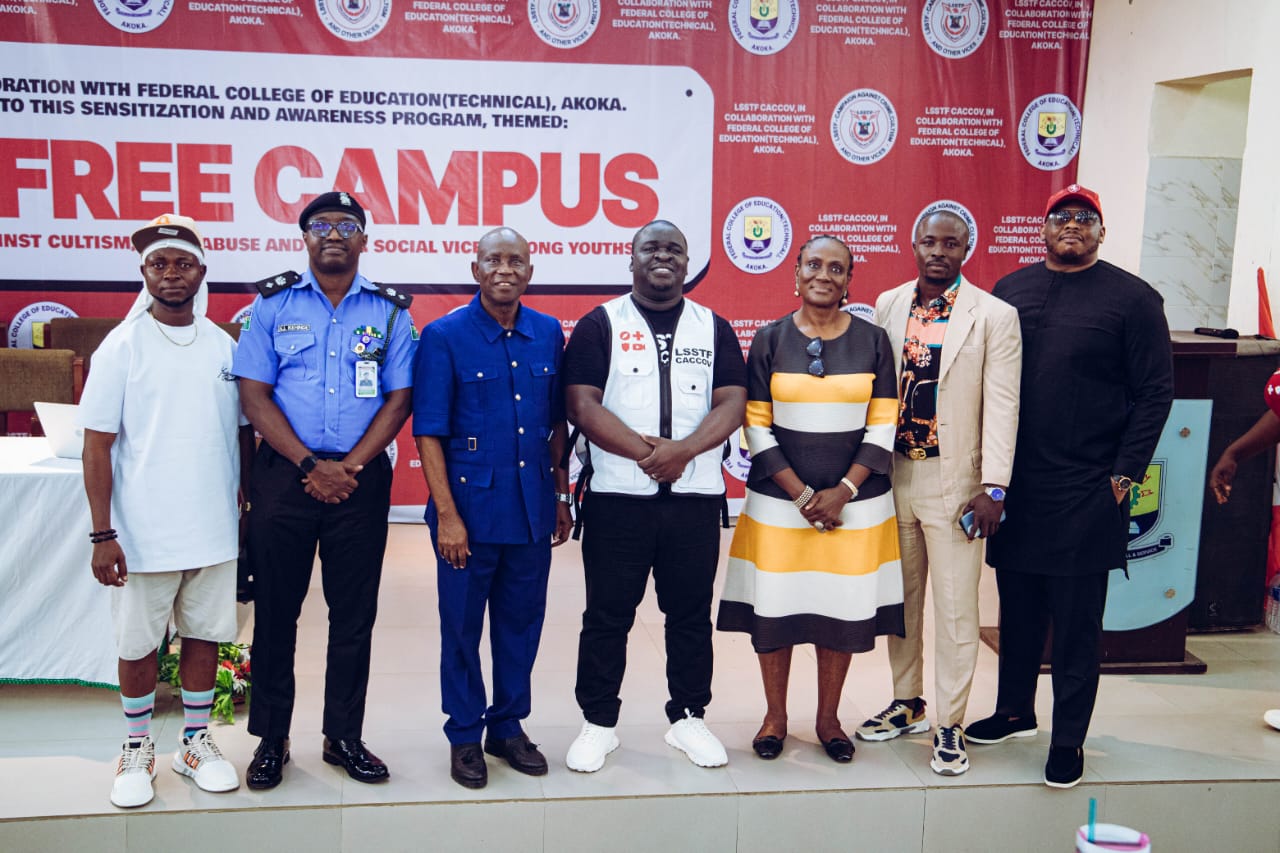
For Lagos, where a large and youthful population converges with immense economic opportunities, a vibrant social culture and the pressures that accompany urban life, the question of youth development is inseparable from the question of public safety. It was against this backdrop that the Lagos State Security Trust Fund Campaign Against Crime, Cultism and Other Vices (LSSTF-CACCOV), in collaboration with the Federal College of Education (Technical), Akoka, held a sensitization and awareness programme themed “Vice-Free Campus: Taking A Firm Stand Against Cultism, Drug Abuse and Other Social Vices Among Youths.”
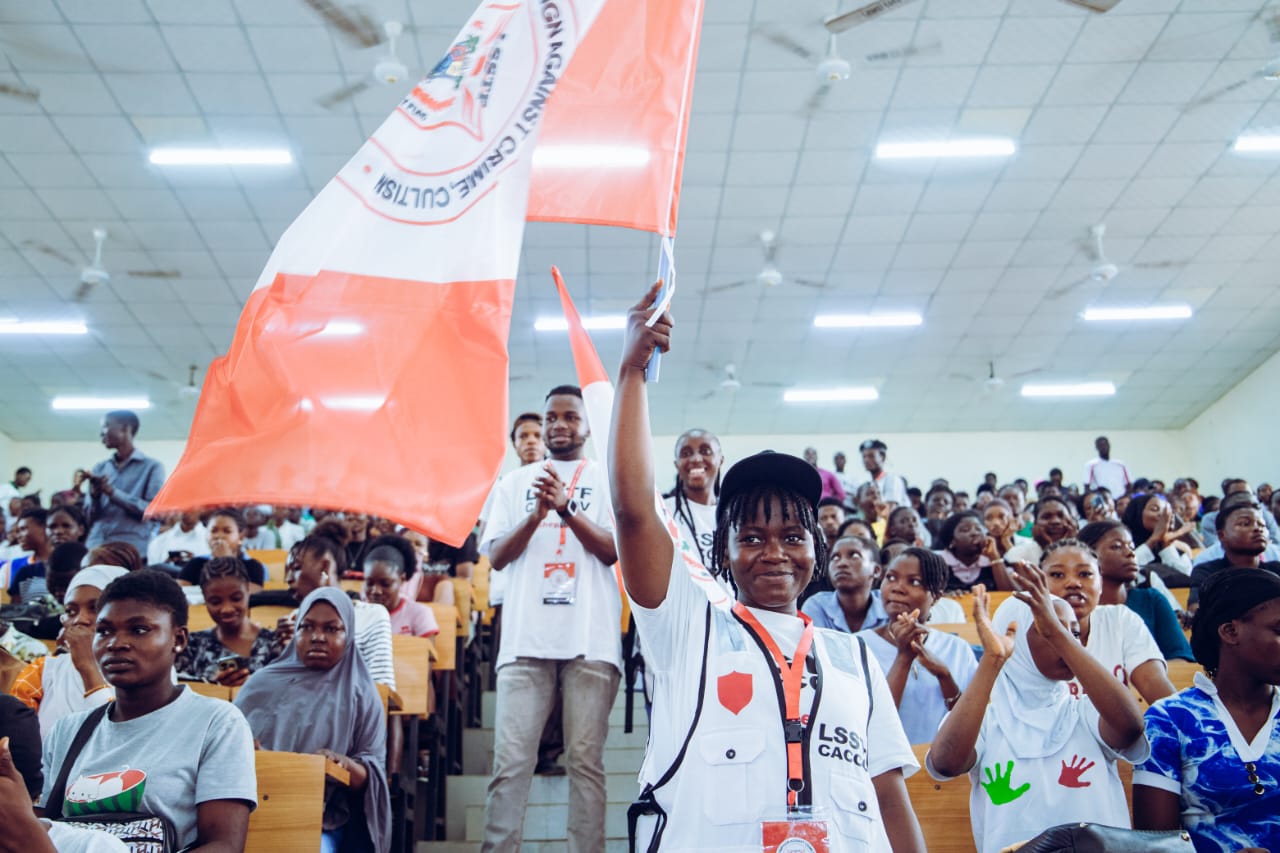
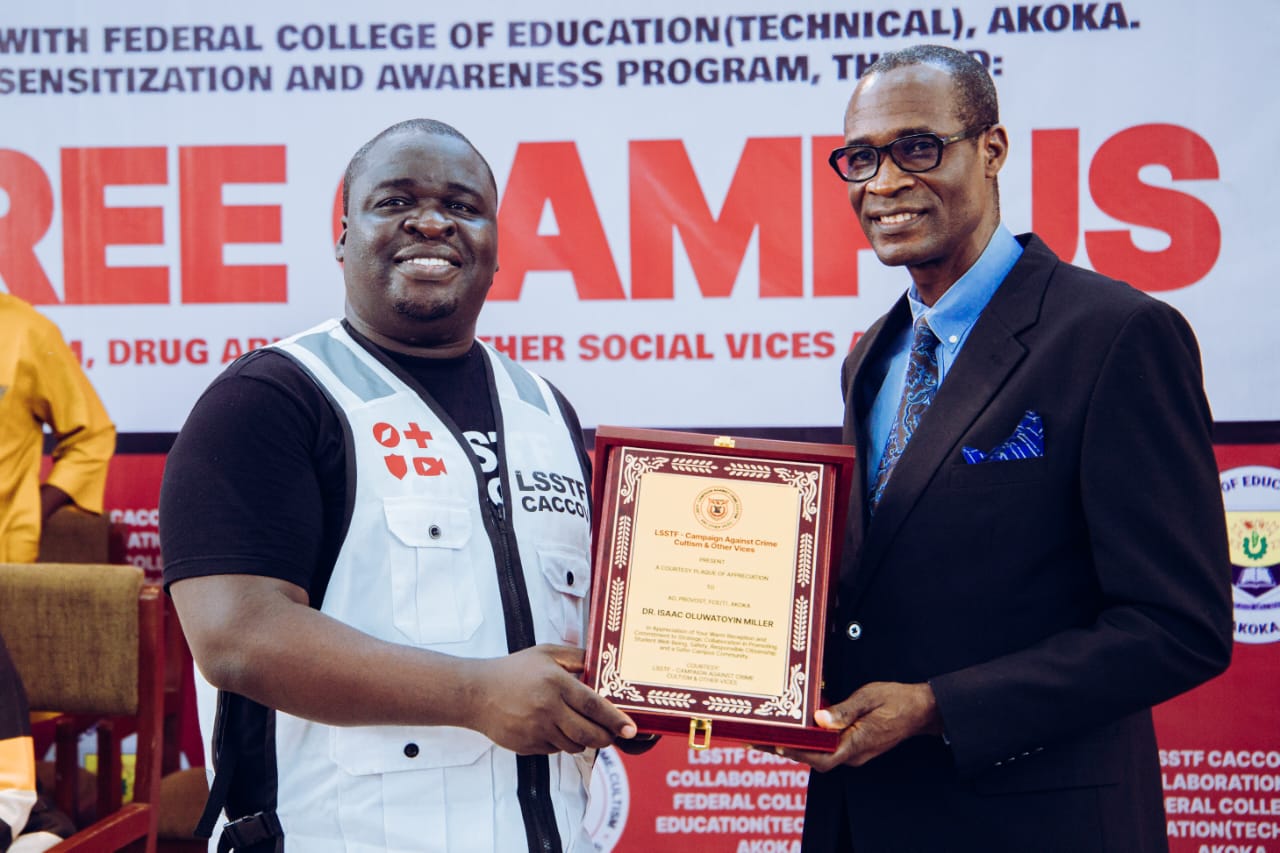
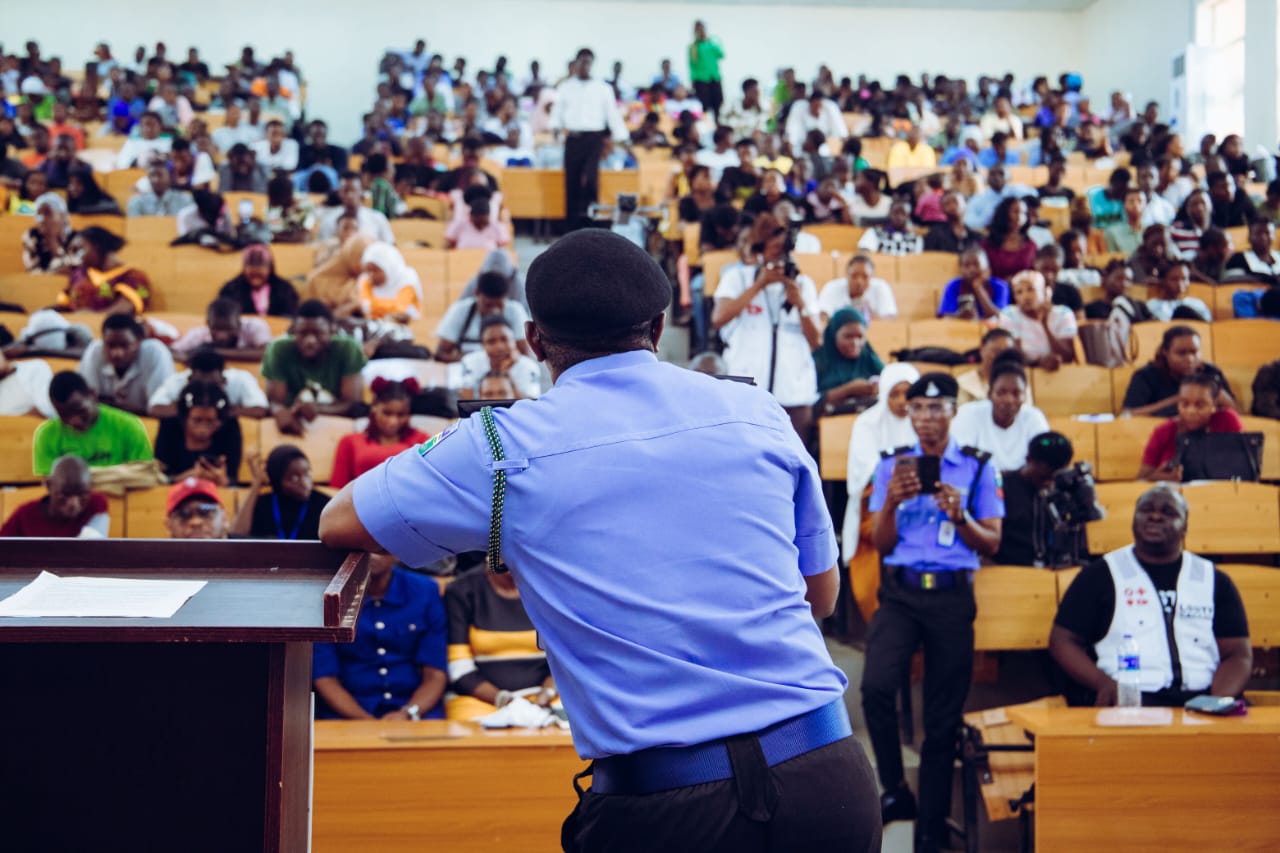
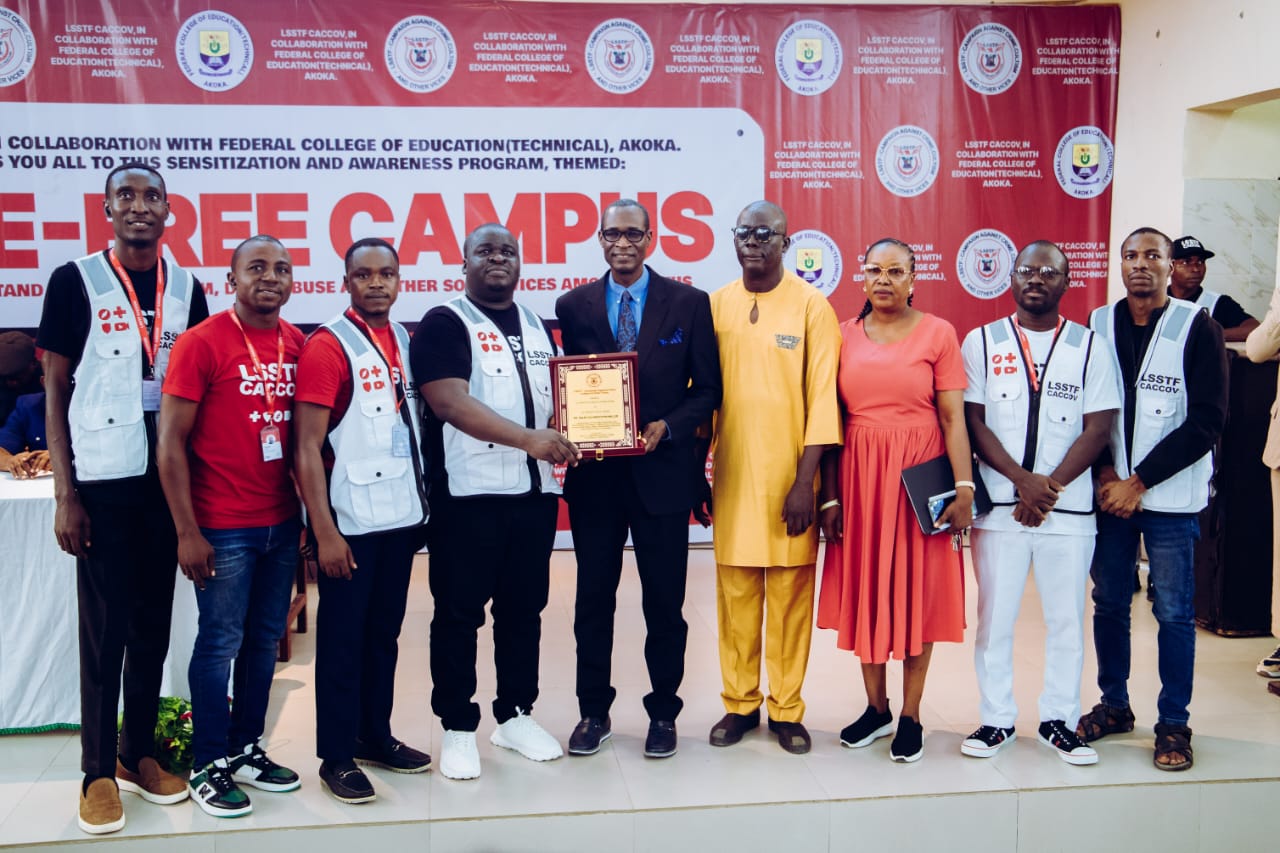
The programme, held at the Federal College of Education (Technical), Akoka, brought together school authorities, security stakeholders, medical professionals, addiction specialists and students for an unusually direct conversation about how seemingly small choices can alter the course of a young person’s life. Beyond speeches, students received counselling from the LSSTF-CACCOV team, while a free medical check-up session for the participants was provided by Dr. Diya Medical Team, courtesy of the Lagos State Security Trust Fund (LSSTF). The event also featured the presentation of awards to the Provost in recognition of the institution’s partnership and support for the initiative.
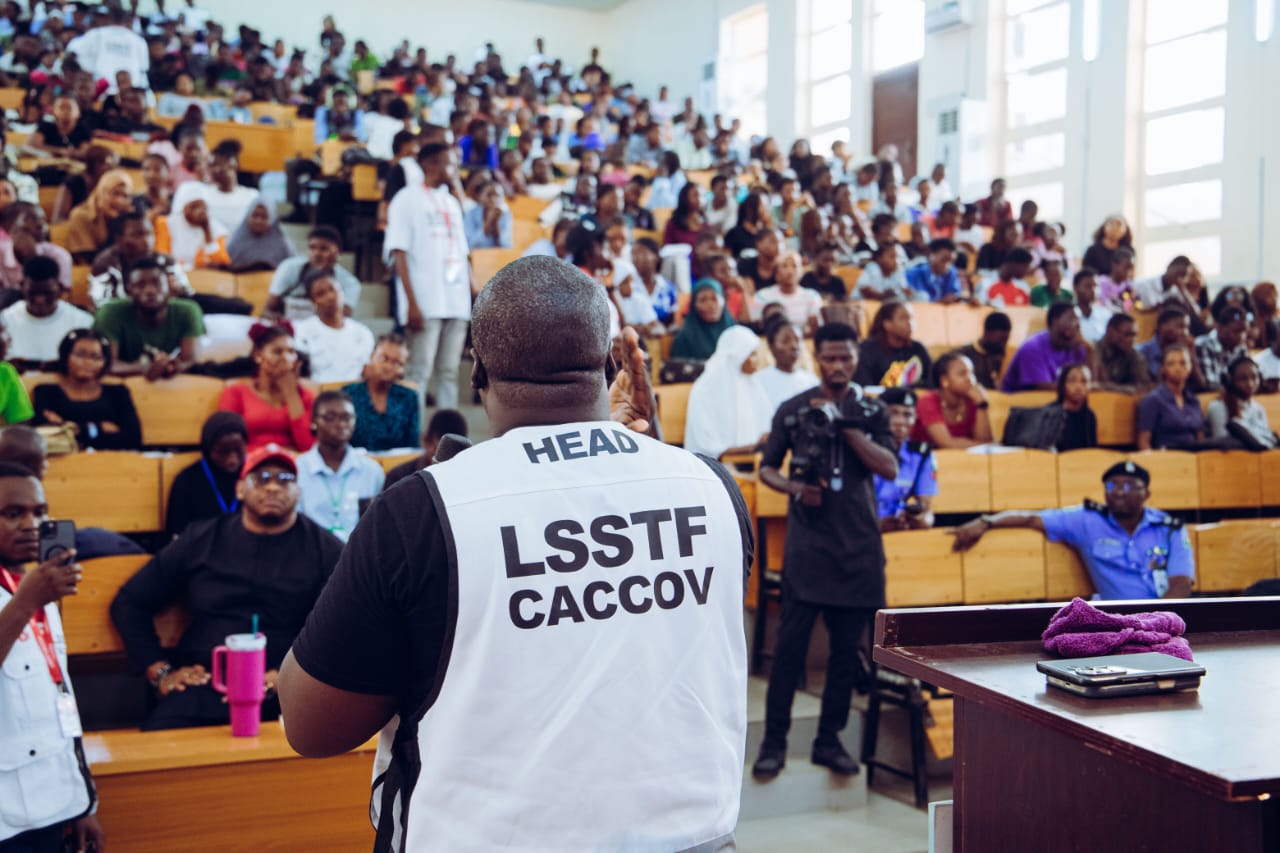
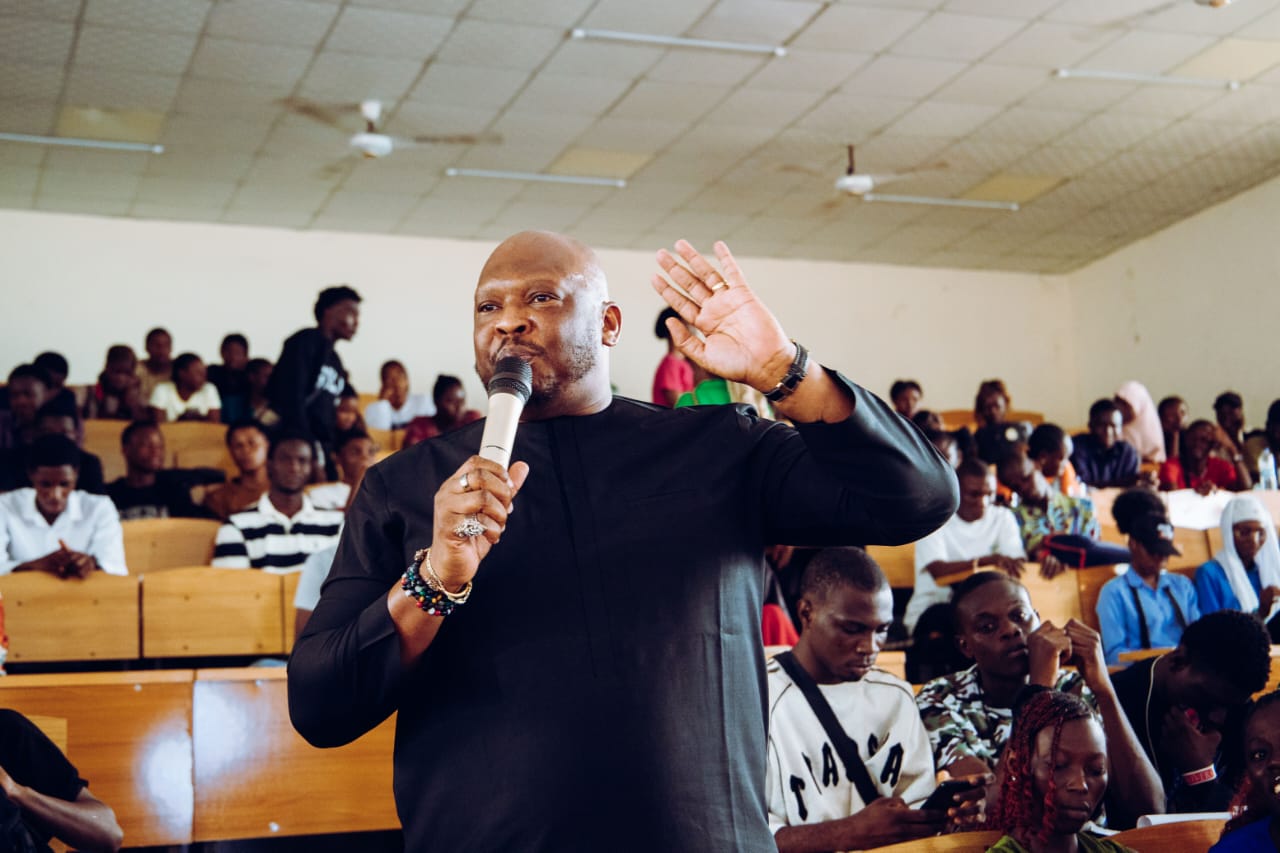
Delivering the keynote sensitization, the State Coordinator, LSSTF-CACCOV, Dr. Moses Oladimeji thanked the Executive Secretary/CEO of LSSTF, Dr. Ayodele Ogunsan for the conceptualisation and support of the youth-led initiative. He applauded Ogunsan for his game changing efforts at the security funding agency since October 2025 when he assumed office.
Addressing the students, Oladimeji deployed storytelling to pass across his message. He told them that one of the most powerful lessons of the day could be found in the tragic story of a brilliant young Nigerian, Mayomi Fiwashewa, who he said excelled brilliantly in his WAEC and JAMB examinations and attracted scholarship offers because of his academic performance. Coming from a poor background, his mother reportedly made a living from operating a grinding mill, but his academic brilliance opened doors that could have transformed his life.

According to Oladimeji, the young scholar became vulnerable after becoming involved with a girl who was associated with a cult group. What initially appeared to be an innocent academic relationship allegedly resulted in threats from her cultist boyfriend. The young man was subsequently persuaded to seek protection by joining what was presented to him as an “elite” or “big boys” club.
That decision, Oladimeji said, became the beginning of a devastating journey. “He was brilliant, but he was not intelligent,” stressing the distinction between academic brilliance and the wisdom required to protect one’s destiny. He said Fiwashewa was eventually initiated into the cult group and, following a violent clash between rival groups, was expelled from the institution along with other students. His name, he recalled, moved from the academic “A list” to the disciplinary list.
The consequences were catastrophic. Mayomi was expelled and the news of expulsion contributed to the death of his mother, who already suffered from high blood pressure. Unable to tell his parents the true circumstances surrounding his expulsion, he eventually found himself under a Lagos bridge, mixing with criminals before progressing into armed robbery. Years later, Fiwashewa became involved in a bank robbery during which several people were killed. He was eventually arrested, prosecuted and sentenced to death by hanging.
Yet, in one of the most striking moments of the story, Oladimeji said Fiwashewa had a dream on the eve of his execution in which he saw himself as a renowned neurosurgeon whose operations were saving lives and attracting national celebration. “But when he was to wake up, he didn’t wake up in that dream to that reality. He woke up to a warder standing before him and saying, ‘Mayomi, your time has now come to an end.’”
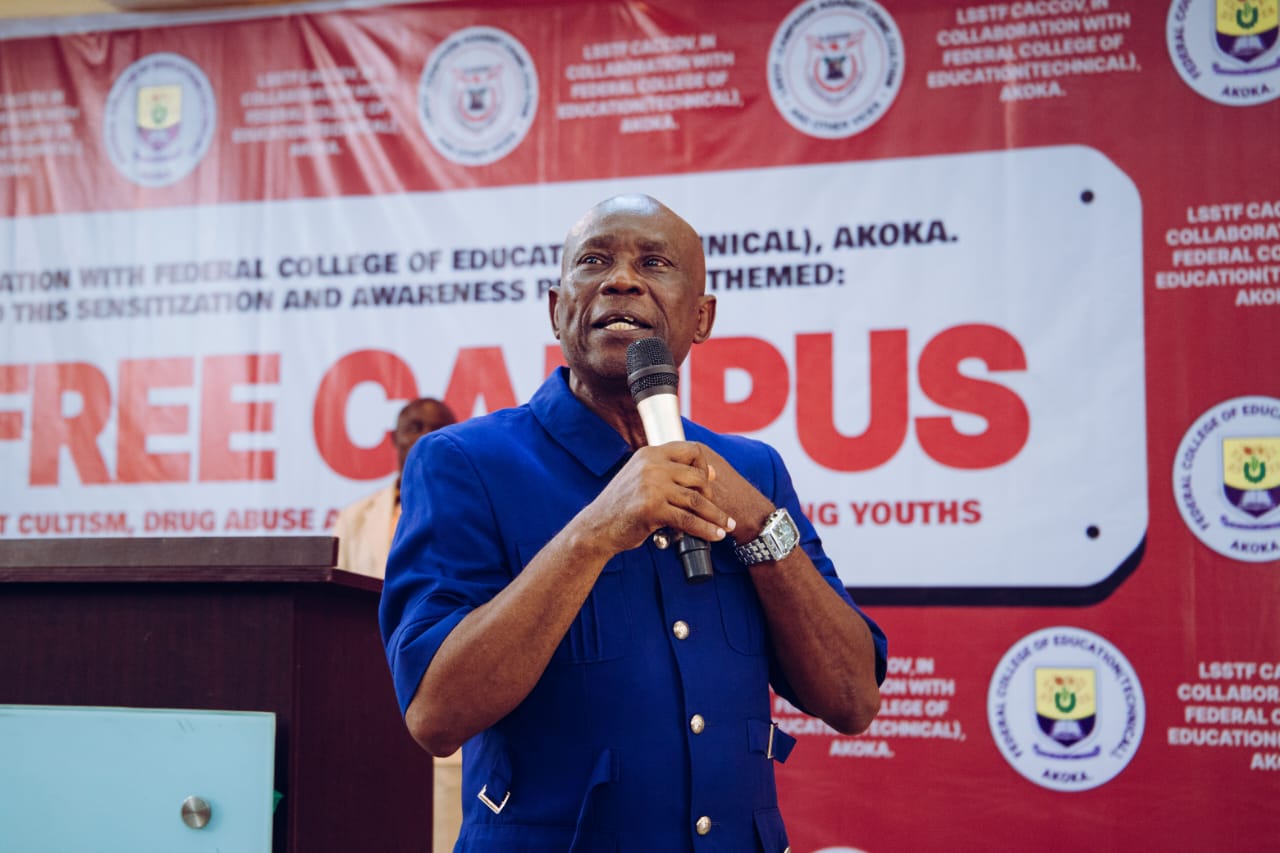
Oladimeji then drew attention to a significant detail in the story: Fiwashewa had a friend named Ayo, who repeatedly warned him against joining the cult group. “Ayo happens to be a friend of Mayomi,” he said, before making the connection to the present security campaign. “It is not a coincidence that the name of the Executive Secretary/CEO of Lagos State Security Trust Fund (LSSTF) is Dr. Ayodele. Ayo happens to be a friend of Mayomi.”
According to Oladimeji, the lesson was not about destiny alone but about choices, friendships and the courage to reject destructive influence. “We are here today telling you the same story. Don’t join bad gangs,” he declared. He urged the students to make a personal commitment to live responsibly, reject cultism, drug abuse and prostitution, and become ambassadors for a vice-free society.
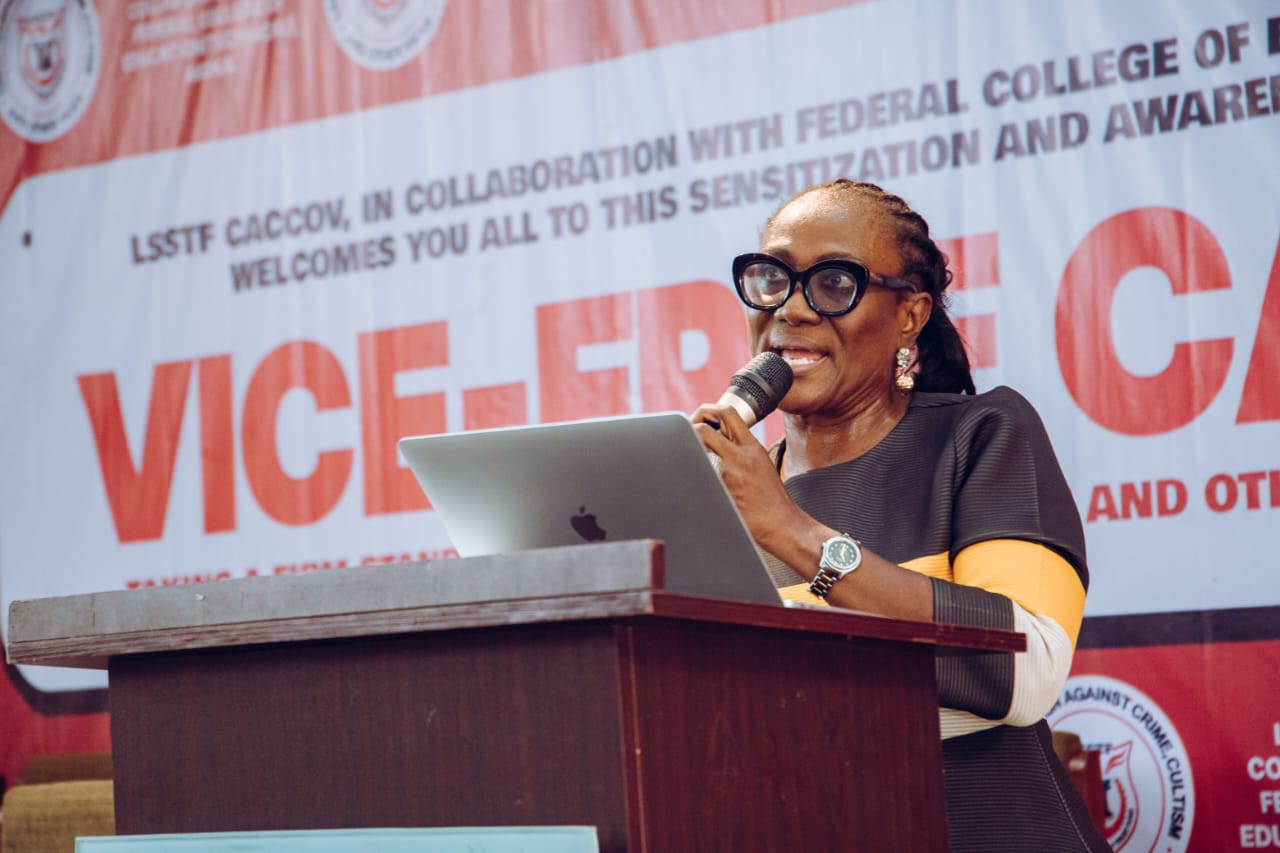
The call resonated with the Acting Provost of FCE (Technical), Akoka, Dr. Isaac Oluwatoyin Miller. Welcoming LSSTF-CACCOV initiative on behalf of the institution. He said academic excellence could not be separated from character, discipline and responsible citizenship
Miller noted that cultism, drug abuse, cybercrime, sexual harassment, violence and related social vices posed threats not only to campus safety but also to the future of young Nigerians. “As an institution entrusted with the education and development of young people, we recognise that academic excellence must go hand-in-hand with good character, discipline and responsible citizenship,” he said.
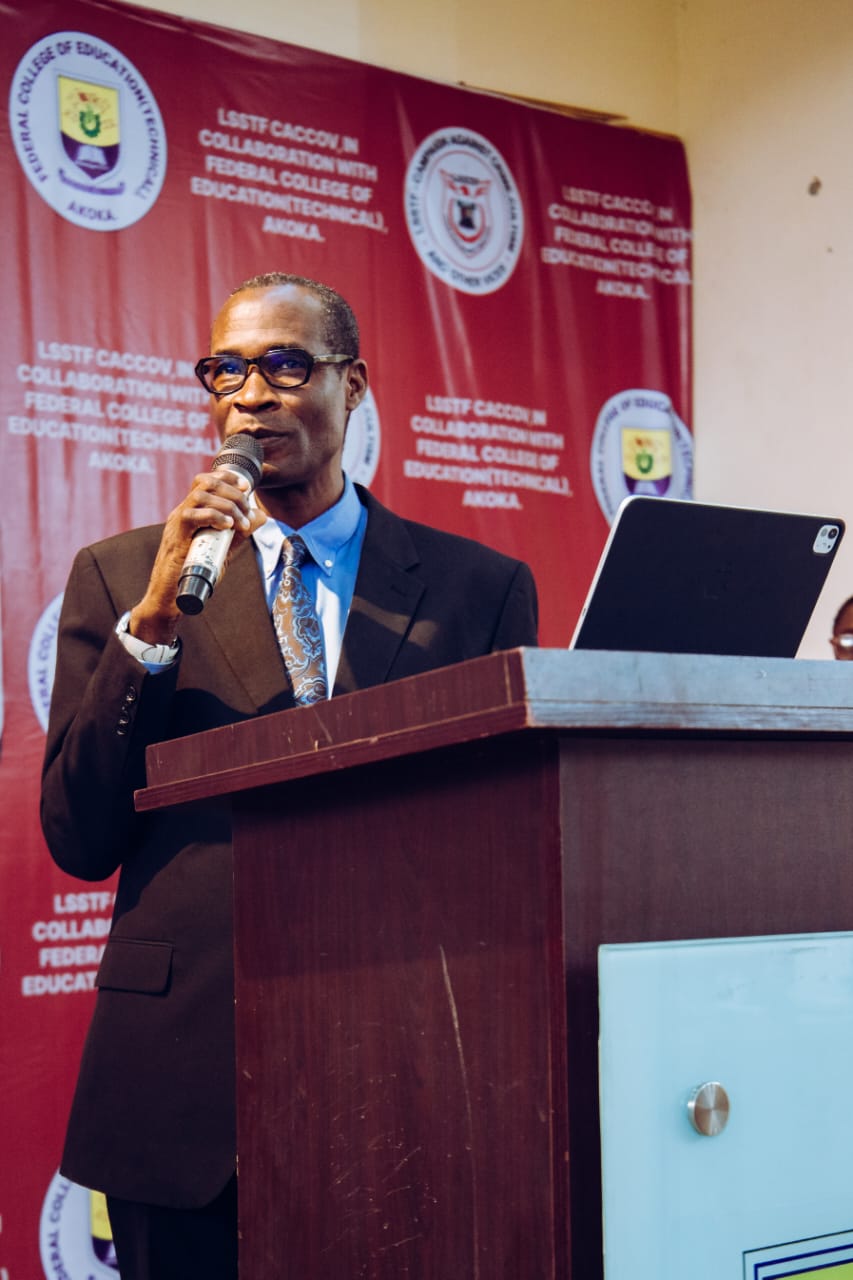
The Acting Provost urged the students to listen carefully, participate actively and take the lessons beyond the programme. “Let each of you become an ambassador for a vice-free campus,” he said, declaring the sensitization programme officially open.
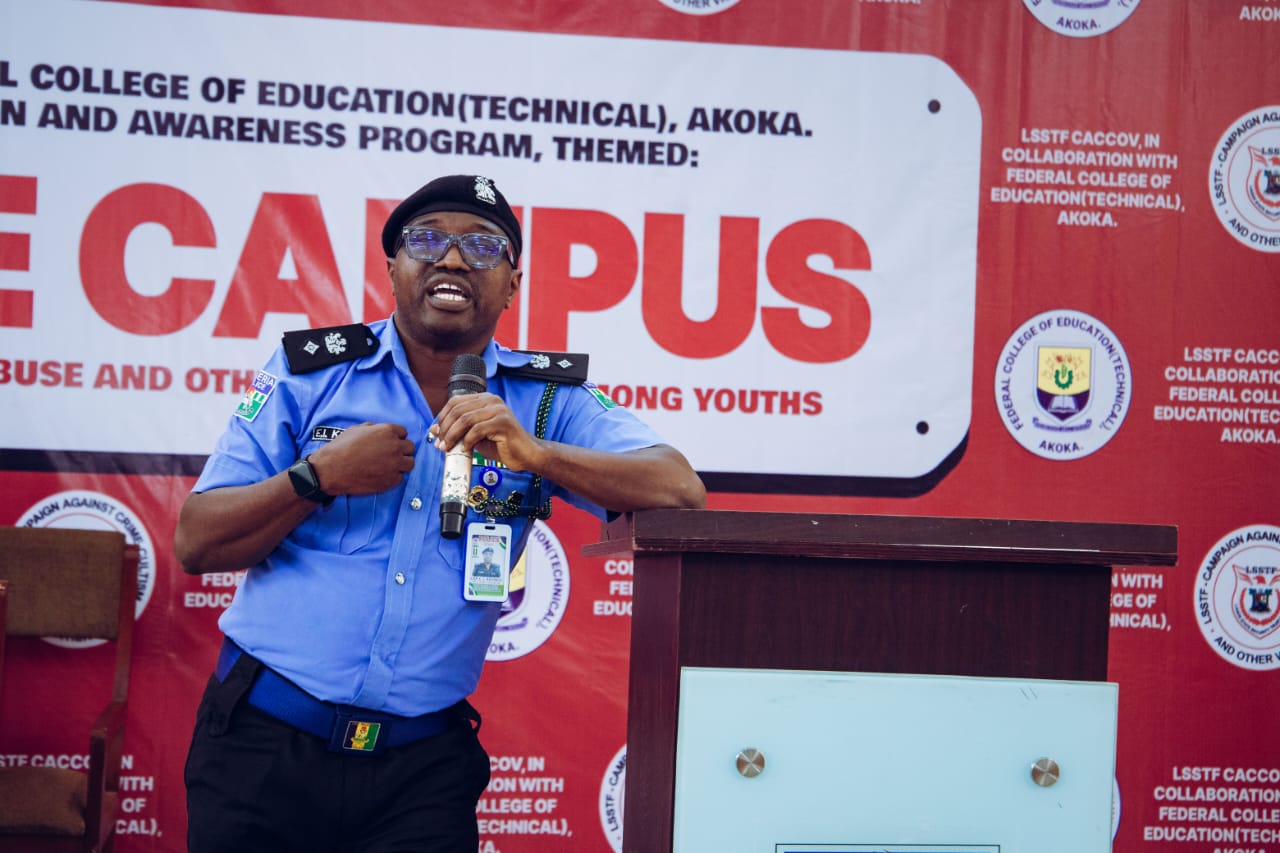
The security dimension of the campaign was further reinforced by the Divisional Police Officer, Sabo Police Station, CSP Kehinde Ebinisi, who told the students that they should see the police not merely as an enforcement institution but as partners in protecting their dreams. “Standing before you today, I want you to see beyond the uniform I’m wearing. I am here as a guardian of your peace, a protector of your dreams, and a partner in your academic journey,” Ebinisi said.
Ebinisi highlighted the personal consequences of criminal activity, including physical injury, disability, trauma, death, academic disruption, isolation and family disgrace. But his message was not solely punitive. He urged students to report suspicious activities and assured them that information could be handled confidentially. “When you see something, you say something so that the police can do something,” he said.

The DPO disclosed that students could approach the Sabo Division or use confidential channels to provide information on cult-related activities and other threats within the school environment. He illustrated the long-term consequences of criminal involvement with the case of Chidinma Ojukwu, the former University of Lagos student convicted in the public eye in connection with the killing of Super TV CEO Usifo Ataga. Ebinisi used the case to demonstrate how involvement in serious crime can interrupt education and leave young people entangled in the criminal justice system for years. “Your future lies in your hands,” he repeatedly told the students.
The medical dimension of the campaign was presented by Dr. Diya Ololade, Executive Director and Deputy Director of Clinical Services, Atlantis Pediatric and Multi-Specialist Hospital, who challenged the widespread belief among young people that drug abuse is only a problem when addiction becomes obvious.

Drawing from nearly two decades of clinical experience, Diya described drug abuse as the harmful use of drugs or substances in ways that place a person’s health, education, relationships or future at risk. He warned that substance abuse often begins innocently with a pill, a drink, a cigarette or an offer from a friend during examination periods, social gatherings or moments of emotional distress. “Substance abuse doesn’t start in a dark alley,” he said. “It starts with a pill, a drug, a drink, offered by a friend during exam week or at a harmless party or get-together.” He identified academic pressure, financial difficulties, relationship problems, loneliness, peer influence, the desire to belong and the influence of digital culture as some of the factors that can make students vulnerable.
Diya particularly warned against self-medication and the misuse of prescription drugs such as tramadol and codeine, stressing that being prescribed or legally available does not automatically make a substance harmless. He explained that substance abuse can affect the brain, liver, kidneys, lungs and reproductive system, while potentially worsening anxiety, depression and other mental health difficulties.

His message was ultimately one of responsibility rather than condemnation..“The stress, the pressure, the loneliness. None of it makes you weak. It makes you human,” he told the students. “But you have a choice right now. The goal of medicine is not just to add years to life, but life to years,” Diya said.
Also speaking, Dr. Adetolu Isaac Olatunde, a Certified Addiction Professional, focused on recognising the early warning signs of addiction and finding a pathway to recovery.
He explained that a drug is a chemical substance, natural or man-made, capable of altering the biological system of the body, and cautioned students against the dangerous assumption that they could control substance use indefinitely. “I am strong enough to handle my drug use,” he identified as one of the common but dangerous thoughts associated with substance abuse.

According to Olatunde, the belief that one can simply stop whenever one chooses often collapses once dependence has developed. “I will quit whenever I want. These are some of the common thoughts. Such options might not be available,” he warned. He urged students to understand that drugs do not operate according to personal terms and conditions, describing dependence as a situation in which something that began as a choice eventually becomes a perceived necessity.
For Mrs. Ibiba Odili, Chief Executive Officer of Phenomenal Strides Foundation, the campaign against drug abuse is deeply personal. Speaking on “Drug Abuse: Shielding Self, My Responsibility, My Journey,” she challenged students to think of prevention as a personal responsibility rather than something to be left to parents, schools, government or law enforcement.
Odili defined drug abuse as “borrowing a fake solution today at the expense of your tomorrow” as she used the imagery of an egg shell, a snail shell and the womb to explain the concept of shielding oneself from harm. She urged young people to deliberately build protective structures around their lives through values, discipline, positive relationships and purposeful decision-making. She also warned that the drug problem was evolving, with new psychoactive substances and new patterns of misuse emerging as society becomes more sophisticated.


The convergence of security enforcement, education, medical intervention, addiction counselling and community engagement reflected a broader understanding of prevention that the battle against social vices cannot be won by arrest and prosecution alone.
The “Vice-Free Campus” campaign at FCE (Technical) Akoka ultimately placed the responsibility where it matters most in the hands of the young people whose choices today will shape the security, productivity and character of tomorrow’s Lagos. The message presented is that while cultism may present itself as protection, drug abuse as escape, peer pressure as friendship and criminality as a shortcut to success, behind those invitations lie consequences capable of destroying years of education, family sacrifices and dreams that took generations to build.