
HIGH-FLYING NGO, SECO SEEKS A SOCIALLY-INCLUSIVE NIGERIA; GIVES KUDOS TO GOVERNMENT FOR INCLUSION POLICY FRAMEWORK •Set to hold annual activity fair and inclusion awareness campaign June 19th
By Oki Samson, Trek Africa Newspaper
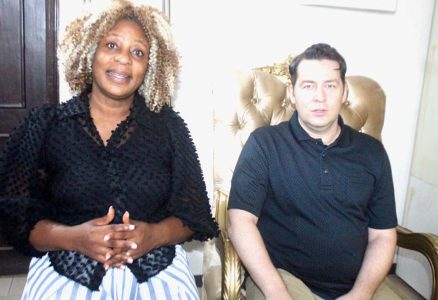 L-R: President & Founder, Special Education Collaborative Outreach (SECO), Mrs. Imuetinyan Okwueze and the Director of Operations, SECO, Mr. Jesse Short, briefing the Media at a Press Conference on the forthcoming SECO’S Annual Activity Fair and Inclusion Awareness Campaign Schedule to take place on 19th June 2021, held in Lagos.
Entrenching the culture of social inclusion is a task that Nigeria is working assiduously towards. The journey is far but the initial baby steps are gradually set in motion. The importance of inclusion to societal development cannot be overemphasized as it ensures that every citizen can participate productively in the process, no matter how small. With inclusion, individuals and groups can feel a sense of belonging, poverty and inequality can be reduced, general wellbeing and happiness can be improved, and social stability is engendered.
The foregoing forms the crux of the work of the Special Education Collaborative Outreach (SECO), a global organization which aims for an inclusive society, in Nigeria. The organization founded by a Nigerian couple, Mrs. Okwueze and her husband Barr. Patrick Okwueze, who are born and bred in the country but have worked for years in the United States where they discovered the inherent benefits of inclusion have a grand plan for this year 2021. This is why the organization has partnered with Lagos State Office for Disability Affairs (LASODA) to achieve their plans.
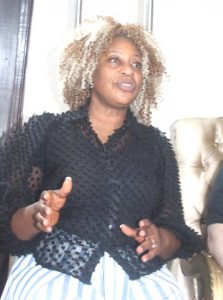 President & Founder, Special Education Collaborative Outreach (SECO), Mrs. Imuetinyan Okwueze.
According to a press briefing with Oki Samson of Trek Africa Newspaper and other media men; on 19th June, the organization will be hosting a Social Awareness Information/Activity Fair at the Adeyemi Bero Hall in Alausa, Ikeja, Lagos. The event which is free to the general public will feature performances and displays such as singing, dances, drama, arts and crafts exhibitions, fashion walks, and other shows from differently-abled individuals. It will also convene rights advocates, celebrities, and recording artists to raise one voice in campaign for equal opportunities and accessibility for individuals with different abilities. All of these efforts, it is noted, will lead to creating an inclusive world.
The non-governmental organization held a press briefing in order to intimate the public on their aims, plans and programmes. Represented by the body’s Global President/Co-Founder, Mrs. Okwueze and project director, Mr. Jesse Short, SECO fielded questions from Trek Africa Newspaper and other media platforms during the press interview.
Trek Africa: Tell us about your organization and what you intend to achieve in Nigeria?
SECO: We are Special Education Collaborative Outreach. It is a global organization and our goal is towards creating an inclusive world. It means nobody should be excluded by race, sex, ability or disability, socially, educationally, physically, or for any reason. Every human being should be given the equal opportunity like the other persons. Just because you are poor and cannot afford school doesn’t mean you shouldn’t have a good education. Many children are in the slums whose parents can’t pay for good schools or get enrichment programs like coding but they should have the opportunities like the child who lives in the best part of town. This means public schools should be equipped like the private, expensive schools to take care of those children. That is what we call inclusion.
Now for those who have challenges – physical/visible, intellectual, health impairment – there are many things that people struggle with. Some are more obvious than others. We all have disabilities; it is just that some of our disabilities are not visible but there is something that you struggle with. Some struggle with stress or anxiety which is not visible but that doesn’t mean I should exclude those who have visible challenges. Everybody should have equal opportunities in life. Those whose parents cannot afford it, the government should come in and fill that gap.
This is why SECO is in Nigeria. It is to fulfill our mission to create an inclusive society. Whatever it takes, we wa hint to do.
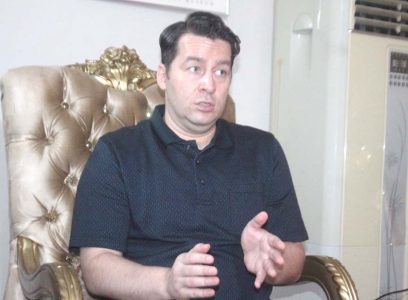 Director of Operations, SECO, Mr. Jesse Short responding to questions during the press briefing
Trek Africa: You have lofty ideas but why Nigeria despite the immense challenges we are faced with?
SECO: Despite the difficulties of Nigeria, we see it as the right place to start. We will make a bigger difference here. We could go to a smaller West African country where they are open to ideas but we believe that if we can crack the situation in a big country like Nigeria, everyone around Nigeria will fall in line with the policies and practices that are already created in Nigeria.
Our motivation comes from our founders, Mrs. Okwueze and her husband. They are from Nigeria. They grew up in Nigeria. They were born, raised and educated here. They came to America to work and raise their children but they visit Nigeria regularly. They know the people and culture here. They have friends and family here. They want to bring their expertise and experience to help children in Nigeria. They want to start fixing things from their homeland.
Finally, Nigeria is at a major turning point with all of the stressors, systems, and hidden issues coming to light. Nigeria is expected to have the second largest population in the world by the year 2100 behind only China. Nigeria is growing extremely rapidly in terms of industry and population. Government is trying to work itself up and if the foundation is laid so that inclusion is made a part of the Nigerian society now, then today’s children who will be leaders in the next 40 years can make the difference that would make Nigeria a world leader equal in power to China, Russia, US, and UK.
Director of Operations, SECO, Mr. Jesse Short responding to questions during the media briefing the Media at Lekki.
Trek Africa: Do you believe that SECO can succeed with the policy on ground?
SECO: The policy on ground is not in its best form, there is more to do. Right now, the current law on disability is more focused on infrastructure which is not there yet. They only just constituted a board/committee to look into it. We are still waiting to see what they are going to do.
We need more in the area of rights of people with disabilities. Yes, we want transportation that will take them to and fro but we are also looking at things like medical care, occupational therapy, physical therapy, speech therapy, psychological evaluation. We are looking at the government providing medical centres in communities where people can access these services for free or at discounted rates. Currently in the medical field, most doctors don’t know what to do when parents bring the kids to them saying my child seems different. It is a slow development process. Nigeria is at the very beginning of it.
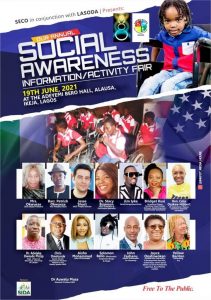 SECO’s Annual Social Awareness Information and Activity Fair 2021.
Trek Africa: What is the global best practice in this regard?
SECO: In the United States, when we have a child with autism, Down syndrome, learning disabilities such as ADHD, or behavioral issues; they are assigned to neurological specialists on a monthly basis for a checkup. If need be, the neurologists will adjust prescription medications for those children that will regulate their behavior and most of them are assigned therapists, behavioural counselors that work with the parents and teachers to make sure a team is built around the child. And it works.
But in Nigeria, I don’t even know if the government policy makers know that all of these is involved.
Trek Africa: What should Nigeria do to her policy in order to make a big difference?
SECO: Right now, the law is in place and the committee is formed. This is great. It is an incredible first step to have facilities – handicap wheelchair ramps, elevators, speech-to-talk systems, interpreters for the deaf, Braille, signs on government and public buildings – this has to come first absolutely. Without accessibility, these individuals cannot move around, work, earn a living, and improve their worth in the society. But further down the line, the extra conditions must be brought to light.
Trek Africa: What will be your submission to government on our laws?
SECO: Our submission will be that we have the laws, let it be enforced. We don’t want to have a piece of paper. We want to have it live in operation. So if government says there should be ramps, then they must give deadlines to institutions like banks to ensure they have it in place for their customers that need it. Every bank should have a special phone that can be used to speak to the deaf. They should have a sign language personnel. The blind person should be able to withdraw money themselves not sit down in their car for someone to withdraw for them and something goes wrong. There should be sidewalks on the streets so that these people can move around.
The bill was signed in January 2019, this is June 2021; COVID was a big setback we understand but COVID was only 1 year and the bill has been in place for two and half years. Where are the buses with wheelchair ramps? Enforcement of the policy is the issue. The policy is great.
Trek Africa: We have talked more about infrastructure for adults, what about the kids?
SECO: Some kids need wheelchairs but their parents cannot afford it. Why should they crawl when they can move by wheelchairs? If that is their form of mobility, we have to provide it. Some aged people need wheelchair too. They get to a certain age and they fall and injure their knees and can’t move anymore.
When the kids get to their class, they can sit on the wheelchairs too. They shouldn’t be lying on the floor or sitting on a bench where they can fall. We have a lot of special schools for the children. We want all these schools to unite as a voice in the society.
At home also, they can move from sitting room and back. Instead of parents carrying them to the bath, they can go to the bath. We want these kids to be as independent as possible. There is dignity in independence.
When the public infrastructure is available, the children will already be used to their walkers and wheelchairs to use ramps in offices, business places, malls etc. They will be better able to move on to the next phase of life.
Trek Africa: On a personal note, how did you both come into the world of special education? Did you have a family or friend who has special needs?
SECO: I don’t have to have a child with disability to be passionate. For me as Mrs. Okwueze, I am a special education teacher. I work in the public education system. I have the passion for them. For me as Jesse Short, I work in private education. So after the kids close in school, I go home to coordinate so that what is being learned in class is not lost but reinforced. I see their personal, academics, and family life. I see the success that comes when we have a strong support system around a child.


