


Ekpo Nta at 74: The Quiet Dignity of a Cerebral Public Servant By Folu Olamiti
By Trek Africa Newspaper
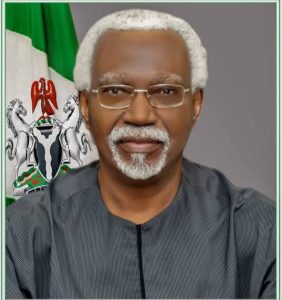
As Mr Ekpo Una Owo Nta celebrates his 74th birthday on 12 October 2026, I am reminded of a quality that has become increasingly uncommon in public life: the ability to occupy positions of considerable responsibility without allowing the privileges of office to overwhelm the discipline of personal conduct.
Nta belongs to a tradition of public service in which intellect, modesty and a quiet determination to achieve results matter more than the attraction of public attention. His career, spanning decades of service in private sector and important government institutions, offers an opportunity to reflect on the enduring value of a public servant who appears more comfortable doing the work than advertising himself.
A lawyer, political scientist and administrator, Nta has served Nigeria in several capacities, including The Niger Delta Development Commission (NDDC), Chairman of the Independent Corrupt Practices and Other Related Offences Commission (ICPC) and subsequently in the National Salaries, Incomes and Wages Commission (NSIWC). These assignments placed him at the centre of two important aspects of governance: the fight against corruption and the administration of public-sector remuneration.
These responsibilities require more than technical knowledge. They demand sound judgement, institutional discipline, a clear understanding of the public interest and the courage to make decisions in an environment where competing expectations can be intense.
Yet, for me, Nta’s professional credentials tell only part of the story. His personal disposition, particularly his preference for modesty and restraint, offers another perspective on the character of the man whose birthday we celebrate.
One episode from his time as chairman of the ICPC remains particularly instructive.
When his daughter, Idorenyin, married in Cross River State, Nta reportedly chose a modest ceremony that deliberately avoided the extravagance often associated with the families of senior public officials.
The wedding’s religious solemnisation took place at St Bernard’s Catholic Church, Marian Hill, Calabar. The event was deliberately low-key, attended principally by close friends, immediate family members and acquaintances.
Nta was reported to have refrained from inviting prominent federal and state government officials, including ministers, heads of government agencies and governors. He was also said to have discouraged friends who had expressed interest in attending, explaining that the ceremony would be modest.
The significance of the occasion lay not simply in the size of the gathering, but in the principle it appeared to communicate. At a time when public office can sometimes become an avenue for conspicuous consumption and elaborate social display, the decision to keep a family celebration within modest limits offered a different example.
It suggested that the privileges associated with public office need not dictate personal lifestyle, and that a public official’s private celebrations can reflect the restraint expected in the discharge of public responsibilities.
For a man leading an anti-corruption agency, that distinction was especially meaningful.
The episode was reported at the time as an example of modesty and disciplined conduct worthy of consideration by other public servants. While a single event cannot define an entire career, it provides a useful window into the values a person chooses to project.
In Nta’s case, the reported decision to keep the wedding private and restrained reinforced the image of a man who preferred substance to spectacle.
An approach to fighting corruption
During his tenure at the ICPC, Nta was also associated with the argument that the fight against corruption should not be reduced to a contest for media attention.
Contemporary reporting described him as advocating an approach that placed greater emphasis on the substance of anti-corruption work rather than the public spectacle surrounding it.
That position raises an important point about the nature of accountability. Public communication is essential to democratic governance, and anti-corruption agencies must explain their actions to Nigerians. But publicity alone is not proof of effectiveness. The ultimate test is whether investigations are conducted professionally, evidence is properly handled, the law is respected and wrongdoing is addressed through due process.
A credible anti-corruption framework requires both transparency and institutional seriousness. It must be able to communicate its work without allowing publicity to become a substitute for results.
Nta’s reported preference for keeping the fight against corruption away from unnecessary media theatrics reflected this distinction. It was an approach that placed the emphasis, at least in principle, on the work itself.
For public institutions operating in a climate of strong public expectations, that remains a worthwhile consideration.
Investing in people: Nta’s commitment to capacity building
Another important dimension of Nta’s leadership, particularly during his tenure at the ICPC, was his reported commitment to capacity building and the professional development of staff.
With his educational background and experience as an administrator, Nta recognised, that the effectiveness of an institution depends not only on the authority of its leadership or the resources at its disposal, but also on the knowledge, competence and integrity of the people entrusted with its responsibilities.
This appreciation of human capital reportedly informed his approach to staff development at the Commission. He facilitated opportunities for members of staff to undertake overseas training in anti-corruption practices, exposing them to professional knowledge and approaches relevant to the fight against corruption.
The emphasis, extended beyond technical expertise to the values underpinning credible public administration: integrity, transparency, accountability and professional responsibility.
These are essential principles in anti-corruption work. Investigators and administrators must understand not only the procedures for identifying and addressing wrongdoing, but also the ethical standards that should guide their own conduct. An institution charged with promoting integrity must continually invest in the people expected to uphold it.
Nta’s reported interest in staff development also extended to further education. Members of staff with lower academic qualifications were given opportunities to pursue higher levels of learning, creating pathways for professional and intellectual advancement. The result, witnessed considerable number of staff members eventually earned doctoral degrees.
If properly documented, this aspect of his leadership deserves particular recognition. It speaks to a philosophy of administration that sees education not as a privilege reserved for a select few, but as an investment in people and the institutions they serve.
The importance of such investment cannot be overstated. Training broadens professional perspectives; advanced education strengthens analytical capacity; and exposure to international practices can help public institutions learn from experience beyond their immediate environment. When these opportunities are accompanied by ethical discipline, they can strengthen the quality of public service.
For Nta, the significance of capacity building lies in the possibility that the benefits of leadership can outlast the tenure of the person who provides it. An office holder leaves a more enduring mark when the people who remain in the institution are better equipped to perform their duties than they were before.
This is one of the more meaningful ways to assess leadership: not simply by the decisions taken while in office, but by the competence, confidence and professional capacity developed among those who must carry the work forward.
In an era when public institutions are expected to deliver more with limited resources and respond to increasingly complex challenges, the development of capable and ethical personnel is indispensable. Nta’s reported emphasis on staff training and further education therefore adds an important dimension to the picture of a public servant whose interests extended beyond his own position.
From anti-corruption to public-sector wages
Nta’s subsequent service at the National Salaries, Incomes and Wages Commission broadened the range of public responsibilities with which his name became associated.
When he took over leadership of the Commission following the completion of Chief Richard Egbule’s statutory tenure, the transition marked another chapter in his public-service career.
In a statement reported at the time, the Commission’s Chief Press Secretary, Emma Njoku, said Egbule had handed over to Nta, who was then serving as Commissioner for Compensation at the institution.
Egbule described his own tenure as historic, noting that he was the first chairman to complete two terms and that he had served as the Commission’s pioneer staff member from its establishment in 1992. He also urged staff to familiarise themselves with the law establishing the Commission, emphasising its contribution to the civil service and the welfare of public servants.
That institutional context is important. The administration of salaries and wages is not merely a technical exercise in determining figures. It touches the livelihoods of millions of workers, the capacity of governments to meet their obligations, industrial relations, productivity and the wider management of public expenditure.
Getting the balance right requires an understanding of workers’ legitimate expectations as well as the fiscal and economic pressures confronting government.
It also requires patience, negotiation and an appreciation of the consequences that policy decisions can have on households and public institutions.
Nta’s experience in the Commission therefore placed him within a field where the quality of administration matters directly to the welfare of workers and the effective functioning of government.
The value of a quiet disposition
At 74, one of the qualities worth celebrating in Nta is his preference for a relatively low public profile.
There is a difference between a person who seeks attention and one who seeks to make a contribution. In public life, the two are sometimes confused, with visibility mistaken for effectiveness and self-promotion treated as evidence of achievement.
But some of the most consequential work takes place away from public view: in policy discussions, professional consultations, institutional deliberations and the painstaking effort required to reconcile competing interests.
A quiet disposition does not automatically guarantee competence, just as a prominent public profile does not necessarily indicate poor performance. Ultimately, the record must speak for itself. Nevertheless, modesty can be a valuable personal quality when it is accompanied by professional discipline, intellectual preparation and a commitment to duty.
Nta’s career offers an opportunity to recognise that distinction.
His background in law, political science and administration reflects an intellectual foundation suited to the demands of public institutions. His service at NDDC, the ICPC and the National Salaries, Incomes and Wages Commission brought him into contact with questions central to governance, accountability and the welfare of public servants.
His reported commitment to capacity building adds another important consideration: that public leadership is not solely about directing others, but also about creating opportunities for them to learn, improve and contribute at a higher level.
More importantly, his reported preference for modest personal conduct offers a reminder that the dignity of public office is not measured by the extravagance of its occupant’s lifestyle.
The public servant who understands the temporary nature of office is better placed to appreciate that authority carries obligations, not merely privileges.
A birthday and a reflection on public service
Nigeria needs public servants who recognise that public office is a trust. It needs administrators who appreciate the importance of institutions, professionals who approach difficult assignments with intellectual seriousness, and leaders who understand that lasting contributions are rarely achieved through publicity alone.
It also needs a culture in which performance is assessed honestly, public officials are held accountable and genuine contributions are recognised without exaggeration.
Nta’s 74th birthday provides an appropriate moment to reflect on these values and to acknowledge a career spent in the service of public institutions.
For me, the most enduring lessons in the accounts of his modest wedding, his approach to public responsibilities and his reported investment in staff development are that character is often revealed in the choices people make when they have the means or opportunity to do otherwise, and that leadership becomes more meaningful when it leaves people and institutions better equipped for the future.


