


TINUBU: REFORM, RENEWAL AND NATIONAL TRANSFORMATION – By Ayinde O. Ayinde, PhD
By Trek Africa Newspaper
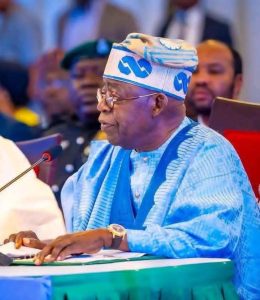
There are moments in the history of nations when leadership is measured not by the comfort it provides to the present, but by the structural foundations it lays for the future. Nigeria is presently experiencing one of those defining moments. Since assuming office, President Bola Ahmed Tinubu has embarked upon a reform trajectory whose implications extend far beyond conventional political administration. His governing philosophy has increasingly been expressed through institutional restructuring, fiscal recalibration, infrastructure expansion, economic liberalisation, human capital development, social intervention and the deliberate repositioning of Nigeria within the architecture of global commerce and investment.
The removal of the fuel subsidy in May 2023 was perhaps the clearest demonstration of this reform disposition. Whatever the immediate discomfort associated with the policy, the intervention confronted a subsidy regime that had for years generated enormous fiscal pressure, distorted market incentives and created opportunities for rent extraction and arbitrage. By redirecting public resources away from an opaque and fiscally burdensome structure, the administration created greater room for investment in infrastructure, social protection and productive sectors. The policy therefore represented not merely a petroleum sector adjustment, but a fundamental attempt to redefine the relationship between public expenditure, market efficiency and national development.
The foreign exchange reform followed the same philosophy. The movement towards a more market responsive foreign exchange architecture sought to dismantle multiple exchange rate distortions, reduce opportunities for round tripping and improve price discovery. By narrowing the institutional space for preferential access and artificial arbitrage, the reform sought to establish a more transparent relationship between the naira and underlying market conditions. Such measures are inherently difficult because correcting accumulated distortions almost invariably exposes previously concealed imbalances. Yet economic transformation requires confronting those imbalances rather than perpetually financing them.
The administration has also made significant progress in addressing Nigeria’s debt and foreign exchange liabilities. The reduction in the debt service to revenue ratio from approximately 97 percent to below 50 percent represents an important improvement in fiscal breathing space, while the clearance of more than $10 billion in legacy foreign exchange obligations has helped restore confidence in Nigeria’s financial system and international commercial relationships. External reserves rising above $54 billion further strengthen the country’s external liquidity position and provide an additional buffer against international financial volatility.
The broader macroeconomic picture is equally significant. Nigeria recorded a trade surplus of approximately ₦7.46 trillion in the second quarter of 2025, while manufactured exports reportedly increased substantially and non oil revenue recorded strong growth. The improvement in tax to GDP, from below 10 percent to approximately 13.5 percent, reflects an expanding effort to strengthen domestic revenue mobilisation and reduce excessive dependence on volatile commodity receipts. This is particularly important because sustainable development cannot be financed indefinitely through borrowing or petroleum revenue alone. A modern state requires a broad, predictable and administratively credible fiscal base.
The transformation is also visible in intergovernmental fiscal relations. The substantial increase in monthly FAAC allocations has strengthened the fiscal capacity of states and local governments, potentially expanding their ability to finance infrastructure, social services and economic development. At the same time, the dramatic appreciation of market valuation reflected in the growth of the Nigerian Exchange All Share Index demonstrates the increasing depth and confidence within the domestic capital market. Capital markets are not merely barometers of investor sentiment; they are mechanisms through which savings are converted into investment, corporate expansion and long term wealth creation.
The enactment of four major tax reform bills constitutes another potentially consequential institutional intervention. Tax reform is not simply about increasing government revenue. Properly designed taxation improves compliance, broadens the formal economy, reduces arbitrary administrative burdens, strengthens fiscal accountability and establishes a more predictable environment for private investment. The deeper significance of the reform agenda therefore lies in its attempt to reconstruct the fiscal compact between citizens, enterprises and the state.
Nigeria’s transition towards consecutive quarters of net export performance is another important economic milestone. It signals the possibility of moving beyond an economic structure excessively dependent on crude petroleum exports towards a more diversified export architecture. The reported increase in manufactured exports strengthens this prospect because sustainable external competitiveness ultimately depends on the capacity to produce goods and services that command value in international markets.
Infrastructure has received equally substantial attention. The Lagos Calabar Coastal Highway represents an ambitious attempt to connect major economic corridors, stimulate coastal commerce and unlock new investment opportunities. The Sokoto Badagry Super Highway similarly carries enormous strategic significance by improving east west connectivity, opening productive communities to wider markets and strengthening the economic integration of previously underserved regions, including areas around Oke Ogun and Ofiki. Infrastructure is not simply concrete and asphalt; it is the physical infrastructure of economic opportunity.
The administration’s interventions in the electricity sector also deserve recognition. The Electricity Act 2023 fundamentally altered the regulatory architecture by opening greater space for subnational and private sector participation. The 700MW Zungeru Hydroelectric Power Project and the emergency addition of approximately 625MW to the national grid demonstrate attempts to expand generation capacity and address one of Nigeria’s most persistent constraints to industrialisation. Reliable electricity is not a luxury; it is a foundational input into manufacturing, digital services, agriculture, education and household welfare.
The administration has simultaneously pursued an extensive transportation and logistics agenda. The Second Niger Bridge and its access infrastructure have strengthened connectivity across one of Nigeria’s most economically important corridors, while the ongoing comprehensive rehabilitation of the First Niger Bridge, including enhanced surveillance infrastructure, represents an important investment in the durability and security of the national transport network. The rehabilitation and reconstruction of thousands of kilometres of interstate roads and expressways, together with urban renewal projects, flyovers and road expansion in Abuja, further demonstrate an infrastructure strategy directed towards reducing the transaction costs of movement, commerce and production.
Nigeria’s maritime transformation deserves particular commendation because it has now attracted explicit recognition from the United States. The lifting in August 2026 of the United States Coast Guard’s 12 year enhanced security restrictions, known as the Condition of Entry regime, followed sustained improvements in Nigerian port security and compliance with the International Ship and Port Facility Security Code. The United States subsequently commended Nigeria’s progress, with the reforms expected to reduce additional security requirements and associated costs, improve vessel turnaround and strengthen schedule reliability. This is more than a diplomatic compliment: it is an international validation of institutional progress capable of producing measurable commercial consequences for Nigerian ports and the wider economy.
The modernisation of major ports, including Lekki, Apapa, Tin Can and Onne, complements this maritime progress. The increase in port revenue from approximately ₦424 billion in 2023 to about ₦893 billion in 2024 illustrates the fiscal and commercial potential of improving port administration, infrastructure and operational efficiency. When ports become faster, safer and more predictable, the benefits cascade through manufacturing, logistics, exports, imports, employment and government revenue.
The operationalisation of the Abuja Light Rail has also restored an important dimension of mass urban transportation, while interventions aimed at strengthening railway infrastructure security are essential to protecting long term investments in national mobility. Efficient rail and urban transport systems reduce congestion, lower logistics costs, improve labour mobility and enhance the productivity of metropolitan economies.
Human capital development has equally occupied a prominent position within the administration’s policy architecture. The establishment of the Nigeria Education Loan Fund has created a framework through which students can access financing for higher education and vocational development. With reported disbursements reaching more than 1.6 million students and approximately ₦322 billion as of September 12, 2026, the programme represents a substantial intervention in educational access and human capital accumulation. Its significance lies in recognising education not merely as a social entitlement but as a productive investment in Nigeria’s future labour force.
The 3MTT programme and large scale training in artificial intelligence, cybersecurity, digital technology and related fields further reflect an understanding that the competitiveness of modern economies is increasingly determined by knowledge, technological capability and the productivity of human capital. Nigeria possesses one of Africa’s largest youthful populations; converting that demographic weight into an economic dividend requires deliberate investment in skills, innovation and entrepreneurship.
Financial inclusion and youth enterprise have also received policy attention through initiatives such as CrediCorp, YouthCred, the Creative Economy Development Fund and the expansion of the Nigeria Youth Investment Fund. These interventions attempt to address a persistent structural constraint in the Nigerian economy: the limited access of young people and small businesses to affordable and appropriately structured finance. Credit, when properly allocated and responsibly managed, can transform entrepreneurial potential into productive capacity.
The increase in the national minimum wage from ₦30,000 to ₦70,000 similarly reflects an attempt to respond to changing economic realities and restore purchasing power amid elevated living costs. The deployment of compressed natural gas buses and conversion centres represents another dimension of the response, combining transportation reform with energy diversification and an effort to reduce dependence on conventional petrol consumption.
Social protection has also been strengthened through conditional cash transfers and related interventions designed to cushion vulnerable households from the effects of economic adjustment. The revitalisation of primary healthcare and expansion of oncology and cancer treatment capacity demonstrate an appreciation that economic reform cannot be evaluated exclusively through fiscal statistics and market indicators. The true test of development is whether improvements in economic architecture eventually translate into longer lives, better health, greater educational attainment and enhanced human dignity.
Agriculture has received significant attention through national agricultural growth initiatives, the deployment of more than 2,000 tractors and support for dry season wheat, rice and maize production. These programmes seek to increase domestic productive capacity, strengthen food security, reduce import dependence and create greater resilience against global food price volatility. Agriculture remains one of Nigeria’s most important channels for employment, rural development and poverty reduction.
The administration’s interventions in the solid minerals sector, including the deployment of mining marshals, also represent an attempt to formalise and secure a resource base that has historically operated below its potential. The renewed attention to coal and other mineral resources suggests a broader strategy of economic diversification in which Nigeria seeks to extract greater value from its geological endowment rather than remaining disproportionately dependent on crude petroleum.
Institutional reform has extended to the subnational level. The strengthening of local government financial autonomy following the Supreme Court’s landmark intervention carries potentially profound implications for grassroots development. Effective local governance can improve the delivery of basic services, strengthen accountability and ensure that public resources reach communities with fewer institutional bottlenecks.
The administration’s security agenda has likewise recorded important developments. Sustained military operations against terrorism and banditry, increased pressure on insurgent networks and the surrender of numerous combatants have strengthened the state’s capacity to reclaim territorial and civic space. Improvements in the welfare, remuneration and allowances of military personnel further recognise that national security depends not only on equipment but also on the morale, welfare and professional capacity of those entrusted with protecting the nation.
The expansion of National Identification Number registration to more than 118 million Nigerians represents another foundational institutional achievement. A comprehensive identity infrastructure is indispensable to modern economic governance because it supports financial inclusion, social protection, security administration, taxation, credit systems and evidence based public policy.
The creation and strengthening of regional development commissions also represents a potentially transformative institutional innovation. The Niger Delta Development Commission pioneered the regional development model for the South South, while similar institutional structures have subsequently emerged for other geopolitical regions. Properly managed, these institutions can address regional infrastructure deficits, stimulate local enterprise and promote a more balanced pattern of national development.
Taken together, these interventions reveal a governing philosophy that is broader than individual projects or isolated policy announcements. They represent an attempt to recalibrate Nigeria’s economic incentives, reconstruct institutional capacity, deepen fiscal sustainability, modernise infrastructure, expand productive opportunities and reposition the country for greater participation in the global economy.
Yet the significance of leadership should not be measured merely by the number of projects inaugurated or policies announced. It should be assessed by whether those interventions alter the structural parameters of national development. In this regard, the emerging record deserves serious recognition because it reflects an administration willing to confront difficult inherited distortions rather than perpetually deferring them to another political cycle.
President Bola Ahmed Tinubu therefore deserves commendation not merely for the breadth of initiatives undertaken under his administration, but for the political courage to pursue reforms whose immediate costs have frequently been more visible than their prospective benefits. Across fiscal management, infrastructure, energy, transportation, maritime security, education, agriculture, digital transformation, financial inclusion, institutional reform and national security, his administration has demonstrated an expansive conception of statecraft in which economic reconstruction and social transformation are treated as mutually reinforcing objectives.
The most compelling dimension of this record is that it seeks to move Nigeria from dependence to productivity, from institutional fragmentation to coordination, from policy inertia to purposeful intervention, and from an economy constrained by accumulated distortions to one increasingly positioned for investment, innovation and competitive production. The President’s achievement, therefore, is not adequately captured by any single statistic, project or policy. Its broader significance lies in the cumulative attempt to reconstruct the operating architecture of the Nigerian state and economy.
History will, of course, judge the administration by the durability of these reforms, the quality of implementation and, most importantly, the extent to which ordinary Nigerians eventually experience measurable improvements in purchasing power, employment, security, infrastructure, healthcare, education and living standards. But leadership must also be recognised for the direction it establishes, the institutional obstacles it confronts and the possibilities it creates. By that measure, the administration has undeniably placed reform, reconstruction and national repositioning at the centre of Nigeria’s contemporary development conversation.
President Bola Ahmed Tinubu deserves therefore to be celebrated as a leader whose tenure has been marked by an extraordinary breadth of ambition and an unmistakable determination to confront structural problems that previous administrations often managed incrementally or postponed altogether. From the petroleum and foreign exchange markets to taxation, debt management, ports, roads, railways, electricity, education, agriculture, digital technology, youth empowerment, social protection, national security and regional development, the administration has pursued an expansive programme of institutional and economic reconstruction. The significance of these achievements lies not simply in their quantity, but in their cumulative capacity to reshape incentives, unlock productive potential, restore institutional credibility and expand the horizon of what Nigerians can reasonably expect from government. If these reforms are sustained, deepened and translated into broad based prosperity, they may well constitute one of the most consequential chapters in Nigeria’s continuing search for economic renewal and national greatness.
JAGABAN EVERYWHERE YOU GO!
Long live the Federal Republic of Nigeria.
Ayinde O. Ayinde, PhD
Public Policy Analyst
Adeniyi Jones, Ikeja, Lagos, Nigeria
Email: ayindeconsult@yahoo.com


