


If I Were Voting in Osun on Saturday by Temitope Ajayi
By Trek Africa Newspaper
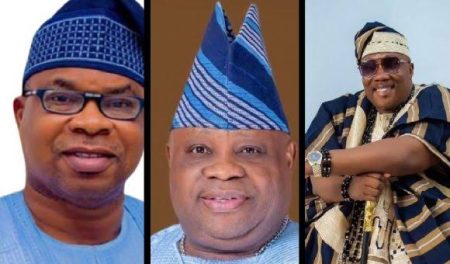
If I were voting in Osun on Saturday, my vote would be for the All Progressives Congress (APC) candidate, Mr. Bola Oyebamiji. I watched the Arise News Townhall and listened to the three major candidates: the incumbent, Ademola Adeleke; Najeem Salam of the African Democratic Congress (ADC); and Oyebamiji.
In our clime, Townhall meetings and debates rarely transform political loyalties. Most people arrive with their minds made up. But if the exercise is judged strictly on policy articulation, command of facts, fiscal realism and evidence of managerial competence, I will candidly say Oyebamiji came out ahead. He appeared to understand government as a management responsibility rather than merely a platform for political performance.
His emphasis was on how public resources should be managed to lift people out of social and economic difficulty, rather than become instruments of personal or familial aggrandisement.
Adeleke was forceful and combative, but beneath the bravado, I found too little substance. Rather than use the opportunity to make a compelling case for what his administration has achieved and where he intends to take Osun, he spent considerable time attacking former governors Olagunsoye Oyinlola and Gboyega Oyetola.
Political attacks may excite loyalists, but they are not substitutes for a convincing account of stewardship. This is particularly important because Adeleke is seeking a second term. A candidate asking voters for another four years should be able to make the election principally about his record, not the shortcomings of predecessors.
Najeem Salam was perhaps the most ambitious in his promises, but that was also his problem. His offer of free services and expansive government intervention sounded attractive, but there was insufficient attention to the harder question of how Osun would pay for them. If he became governor, he would become another Aregbesola in office with bogus programmes and unsustainable projects and throw the Osun State into fiscal cul de sac.
In a state with a history of fiscal constraints, promising everything without convincingly explaining the financing is not social policy, but fiscal romanticism. Oyebamiji, by contrast, played to his professional strength. A former banker and finance commissioner, he demonstrated a firmer grasp of the numbers and the mechanics of government. He cited his stewardship of Osun State Investment Holdings, where he said he helped turn around the organisation and, in the process, building a substantial real estate portfolio in Lagos and Abuja.
He also spoke about his tenure as Commissioner of Finance and the fiscal pressures the Aregbesola administration faced. More importantly, he presented himself as someone who has actually managed public finances rather than just speaking about them. He argued that under Oyetola, when he served as the state’s financial manager, the government met its obligations without fresh borrowing and left about N16 billion in the treasury for the incoming administration. Those claims can be independently verified.
But that, in itself, is the point. A governorship election should be an audit of competing records, plans and managerial capacity, not a popularity contest between personalities. Oyebamiji made the most interesting argument of the townhall sessions when he essentially asked voters to imagine the three candidates sitting before a recruiter who had to choose one of them to manage a business. Looking at their qualifications, experience, temperament and understanding of finance, whom would the recruiter hire?
That is a useful way to look at the Osun election. The state is not recruiting an entertainer, a professional campaigner or a permanent opposition politician. It is recruiting a chief executive to manage a financially constrained public enterprise called Osun State. On the evidence of what I saw at the townhall, Oyebamiji made the stronger case that he understands that job.
So, if I had a vote in Osun on Saturday, my bet would be on Oyebamiji.


