


Applying “Lipstick” Can Actually Make Your Brain Perform Better – Studies
By Trek Africa Newspaper
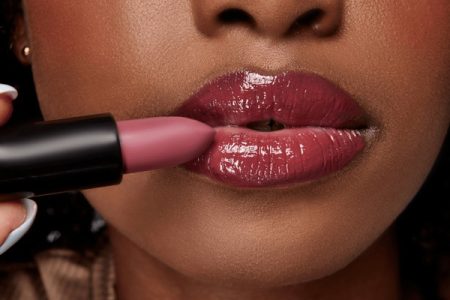
The concept commonly referred to as the “lipstick effect” is supported by psychological and neuroscientific evidence rather than sociocultural trends alone. Empirical research indicates that the act of applying lipstick can elicit a measurable increase in self-confidence, which subsequently enhances aspects of cognitive performance.
Studies published in the Journal of Cosmetic Science report that participants demonstrated improvements in attentional control, task accuracy, and problem-solving ability following lipstick application. These effects are attributed primarily to changes in self-perception and psychological preparedness, rather than to physical appearance or external social feedback.
Neuroscientific interpretations suggest that increased confidence is associated with heightened engagement of the prefrontal cortex, a brain region central to executive functions such as working memory, decision-making, planning, and sustained attention. Activation of this region facilitates more efficient cognitive processing and improved task execution.
Furthermore, personal grooming rituals function as cognitive and behavioural cues that signal a transition into a goal-oriented or performance-ready mental state. Comparable mechanisms have been documented in athletes’ pre-competition routines and in professional contexts where deliberate attire enhances psychological readiness.
Importantly, the observed cognitive benefits occur independently of social observation. Performance gains persist even in isolated conditions, underscoring that the effect is internally mediated through mindset and self-regulation rather than through external validation.
In summary, confidence-anchoring behaviours can meaningfully influence cognitive clarity and performance efficiency. The “lipstick effect” serves as a specific illustration of the broader relationship between self-perception, neural engagement, and cognitive outcomes.


