

There’s more politics in church than Aso Rock — Bishop Ossai
By Trek Africa Newspaper
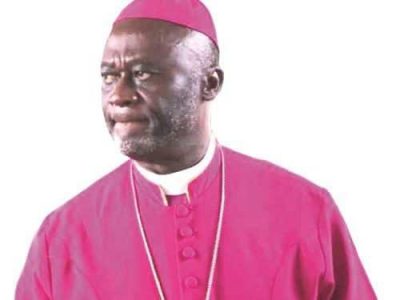 Bishop Oscar Ossai
Charismatic preacher and Bishop of City of Refuge Missions International, Oscar Ossai, was one of the ministers of God who ventured into politics in the build-up to the nation’s return to civilian rule in 1999 but had to quit the scene because of what he called “the abracadabra” that attended the “election and selection” of candidates, which made him to see politics as a dirty game! But Ossai, who had his apostolic tutelage under the late Archbishop Benson Idahosa of Church of God Missions International, returned to gospel ministry only to find that the politics in the church is even more overwhelming than obtains in the secular world. He relived his experience in this regard and other aspects of life in this interview with PAUL UKPABIO
 Bishop Oscar Ossai
In 1999, you ventured into politics and you said you wanted to make a difference, but you soon opted out and never said anything about it again…
(Laughs) That was a really lousy experience which I sometimes look back at and wished I knew better. Well, I was part of the founding members of the PDP (Peoples Democratic Party) in Enugu back then. In my political naivety, I contested for a seat in the House of Representatives. Little did I know that election in Nigeria goes beyond being a known figure or being qualified for the seat. You have to be selected by the people who are already there before you can face the people to contest. I felt there wasn’t internal democracy process in the parties.
I believe that I won in 1999. But somehow, perhaps the results were changed from Abuja. I left them briefly because I got angry and got disenchanted. I left because I had told pastors all over the world, as a member of a pastors’ network which originated in America with over 30,000 pastors on its list worldwide, that I would emerge as the winner and would invite them to Nigeria to democratise the country with us.
I had made lots of noise. I had told them that I won the primaries in the party, only to be told that I lost! It was difficult to face them, so I left politics.
So you made a retreat?
I had to. I didn’t understand the abracadabra that was played against me then. I couldn’t flow with the process because I saw that a lot of things were wrong.
And you went back to embrace the church…
Oh yes, I did just that. The church was home to me. I got born again early so I was part of the student Christian movement. I was in leadership position then at the University of Nigeria. And today, having put in almost 45 years in the church, there is no church I have not been part of except the Redeemed Christian Church of Christ.
I started with Bishop Benson Idahosa in Church of God Mission. I was in UCC at a stage. I was in Scripture Union. I was in Household of God with Kris Okotie who repented right there in my hostel room in the university. At a stage, we were supporting Chris when he started Household of God. I was part of Revival Assembly with Anselm Madubuku. I was part of Glory Land; Word Mission Outreach with my friend Rev Johnson who was with me from the University; Christ Chapel where I had been a prophet in the church. I have been a prayer warrior and head of prayer ministry. I have been a choir member. I have been part of the pastoral team.
You spoke about Rev. Chris Okotie…
Yes. That is one of my seniors in Christianity.
Can you recall how he became born again in your hostel room?
Chris was a friend to Arch Eziekel Nya Etuk, my roommate. Our room, G211 in GH hostel was a room celebrated on campus as being a place for a new phase of born again Christians. I remember Chris saying to me once: ‘Are you saying this Ossai too will be going to heaven?’ We carved an image of being very well dressed and yet we were SUs.
Chris began to come around a few times and eventually gave his life to Christ. This was same time that Jide Obi, who also later became a pop star, repented too.
He was a musician at the time he became a born again Christian. Did you believe him initially?
Initially, I didn’t. Because like we all knew him then, he was deep into music. He sang ‘I need someone…’ He used to come to my room. It was, however, when he got born again that my friendship with him got better.
Did you believe that his being born again would last?
As a matter of fact, some of us who were in the fellowship joined Kris Okotie then because we were afraid that he would backslide. We felt we should hang around him for this thing that God has done for him to survive. That was why some of us came to his church.
Did he have to struggle with Christianity back then?
Kris was a special person. In fact we were shocked. He nearly didn’t even graduate. He just started reading the bible in the bush and everywhere. The quantum of time the guy used in improving himself spiritually was awesome. He made a lot of sacrifice. I have never seen a thing like that. His was phenomenal. One can recall that he got born again with Jide Obi, but where is Jide Obi now? Kris Okotie continued and before we knew it, went ahead and started a church. Some of us in the fellowship then suddenly considered him too serious. His boldness shocked everybody, and that is the truth. I was there. I saw him first giving his life to Christ and I have seen him as a pastor, how he has held on and he loves God with all his heart!
What prompted your recent return to politics?
It was while in the church I realised that when people talk about politics, I saw the ignorance in it all. Church people talk down on politics and I see a lot of ignorance in that because the church itself is totally immersed in politics. There is no gathering of two people where there is no politics, even in families. And even in the church, the politics there is more than the politics in Aso Rock (Presidential Villa). I think what they are talking about and they are against in the church unknown ingly is party politics. That is what the church seems to be against. They don’t know much about that because they have not been there.
Some pastors don’t know anything about politics. My argument has continued to be that politics is about how do we share scarce resources because resources are forever scarce? How do we make sure the greater majority of the people get as much as possible from the resources that are scarce? That is what politics is about.
If the church does not understand and does not like politics, what will you as a bishop be doing in it?


