


FG To End JSS-SSS Separation, Blames Policy For 20 Million Dropouts
By Chika MEFOR-NWACHUKWU
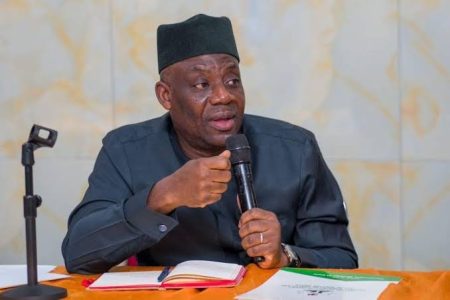
The Federal Government has announced the discontinuation of the disarticulation policy that separated Junior Secondary Schools from Senior Secondary Schools, saying the arrangement has failed and contributed to a crisis of more than 20 million students dropping out before reaching senior secondary.
Minister of Education, Dr Tunji Alausa, disclosed this on Tuesday in Abuja at the inauguration of the UBEC Ministerial Implementation and Monitoring Committee.
He said the policy, which required JSS and SSS to operate separately both physically and administratively, has resulted in overcrowded junior secondary facilities and underutilised senior secondary schools across several states.
According to him, the policy prioritised administrative positions over students’ educational needs and has left thousands of children without access to the next level of learning.
He noted that data from states such as Kaduna and other parts of the north show overflowing JSS classrooms while senior secondary schools remain largely empty because there is one principal for JSS and another for SSS.
“We have 20 million drop out from primary school to JSS. Where are those students? And what we also noticed was that we have 80,000 public primary schools, and junior secondary school, we have just about 15,000. That ratio is one to eight.
“And if you look at the completion rate. So, it’s us as government not doing what we need to do, but the previous government might have failed in this regard, but this government will not fail. We’re fixing this. So, we need to open up as much more opportunities for students to attend these schools, primary schools infrastructure.
“This disarticulation policy has also contributed to this. We’re seeing data from, say, like Kaduna and other northern states, because you have one principal for junior secondary school and another principal for senior secondary schools. We have overflowing JSS, empty senior secondary school.
“So, I can objectively report today that this disarticulation policy has failed. We will phase it out. We can’t be creating positions because we want to create director level for people while we harm our education system. It’s not right. It’s about doing what is good for every Nigerian child.”
Alausa said the proposal to abolish the policy will be tabled for consideration at the next meeting of the National Council on Education as part of efforts to expand access and improve learning outcomes for Nigerian children


