


AI solutions must be built around African realities, experts say
By Oluwatope Lawanson
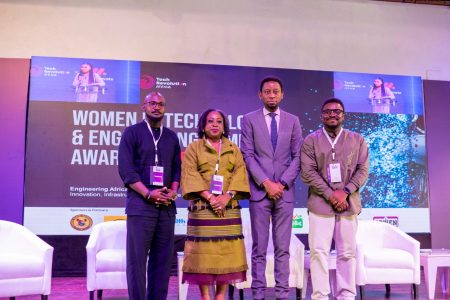
Technology experts have urged innovators, investors and policymakers to prioritise locally relevant artificial intelligence (AI) solutions, to suit African models.
The stakeholders said that Africa’s unique realities required products designed around local needs rather than imported models.
The experts spoke during a panel session at the Women in Technology and Engineering Summit and qAwards (WITESA 5.0) in Lagos.
Co-founder of AI Nigeria, Mr Dotun Adeoye, said many startups failed because they copied foreign business models without adapting them to local realities.
Adeoye said that successful AI products must reflect local languages, cultural nuances, customer behaviour and infrastructure realities.
“You can have AI imported, copied and pasted, and it is not going to work.
“If we are thinking about AI products and services for Nigeria, we must start from our peculiar challenges, including data availability, power and infrastructure,” he said.
According to him, many AI tools were built largely on Western datasets, making localisation critical for relevance and adoption in African markets.
He urged entrepreneurs to remain customer-centric and build solutions around specific problems rather than technology trends.
Speaking on barriers to AI adoption, technology and business process expert, Mrs Hannatu Adegboyega, identified leadership resistance, weak organisational processes and talent shortages as major challenges slowing deployment.
According to her, many business leaders do not fully understand AI and are therefore reluctant to invest in it.
“Sometimes technology is not the problem.
“Many organisations want AI solutions, but they do not know exactly what problem they want solved or what data they should be working with,” she said.
Adegboyega stressed the importance of involving end users throughout product development to ensure solutions address real needs.
“The first question should be: who was in the room when the solution was built?
“The people experiencing the problem must be part of the design process,” she said.
Also speaking, technology inclusion advocate, Mrs Ibiyemi Lawani, said reliable power supply remained important but was only one part of the broader digital inclusion equation.
Lawani said affordability, digital access, trust and talent development must complement infrastructure investments to drive widespread AI adoption.
“Technology cannot create impact if people cannot reliably access it.
“But inclusion goes beyond power. It is about whether people can access, use and benefit from technology,” she said.
She added that addressing infrastructure gaps would unlock greater participation by entrepreneurs, students, women and small businesses in the digital economy.
On investment opportunities, Managing Partner, Verraki Partners, Mr Niyi Yusuf, urged investors to focus on solving practical African problems through AI applications.
Yusuf said investors should define clear outcomes, support visionary entrepreneurs and provide more than capital.
“Success requires market access, strategic networks and long-term support in addition to funding,” he said.
The experts also advised young entrepreneurs to focus on identifying genuine problems, understanding customer needs and starting with available resources rather than waiting for perfect conditions.
They agreed that responsible AI governance, talent development, quality data and localisation would be critical to building sustainable AI solutions across Africa.
The News Agency of Nigeria reports that WITESA 5.0 which was convened by Womenovate and Tech Innovate Africa had the theme ‘Engineering Africa’s Future:Innovation, Infrastructure and Inclusive Technology.
NAN


