

SOCIAL MEDIA IS NOT A BATTLEFIELD COMMAND – WHY THE NIGERIAN ARMY’S ACTION AGAINST JUSTICE CRACK IS A NATIONAL SECURITY IMPERATIVE
By Tijjani Tanko
INTRODUCTION: NATION AT WAR CANNOT AFFORD A SECOND FRONT
Nigeria is not at peace. Across the North East, North West, and North Central, our armed forces are locked in daily combat against terrorists and bandits. Thousands of soldiers are deployed forward, often without rotation, facing an enemy that watches every word on social media. In this environment, the difference between “free speech” and “subversive act” is not academic – it is life and death.
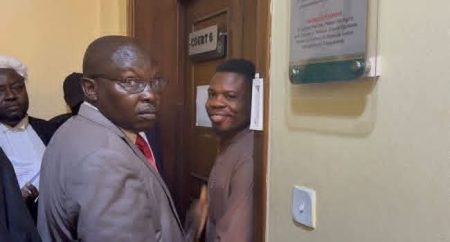
The Nigerian Army recently arrested a social media influencer, Justice Mark Chidiebere (known as “Justice Crack”), and handed him to civil authorities. His crime: systematically spreading content designed to turn soldiers against their commanders over welfare issues – beyond legitimate criticism into active incitement of insubordination. Public outcry has followed, with many calling the Army a silencer of whistleblowers. This statement argues the opposite: the Army acted lawfully, proportionately, and in the highest interest of national security.
WHAT JUSTICE CRACK ACTUALLY DID
On 2 May 2026, the Army announced the arrest of Justice Crack alongside several soldiers. Investigations showed he had built direct communication lines with frontline troops. He did not merely amplify complaints about rations or equipment – he actively urged soldiers to question their commanders’ legitimacy, refuse orders, and post videos attacking military hierarchy. Some soldiers admitted receiving small payments to share internal grievances that should have gone through proper channels.
Crucially, the Army did not court‑martial the influencer. He was handed over to civilian police for normal criminal prosecution. That is not military dictatorship; that is constitutional democracy where no one – influencer or general – is above the law.
WHY THE CRITICISM IS MISPLACED AND DANGEROUS
First, critics confuse “whistleblowing” with “subversion.” A real whistleblower reports specific, verifiable wrongdoing to lawful authorities – Defence Headquarters, Human Rights Commission, or the media with evidence. Justice Crack did none of that. He broadcast unverified, one‑sided narratives meant to make soldiers feel abandoned. In a war zone, that is not transparency; it is psychological warfare.
Second, timing is everything. Isolated welfare lapses exist in every army – including the US, UK, and Russia. But during war, amplifying those lapses in real time to combat units hands the enemy a propaganda tool. Terrorist groups already use such posts to claim “the Nigerian Army is starving” or “commanders don’t care,” lowering troop morale and encouraging desertion.
Third, the Army acted with restraint. No soldier was shot. No journalist was jailed. The influencer was detained, investigated, and transferred to civilian police – exactly the same process for any civilian who incites factory workers to sabotage production during wartime. Why should the military be held to a lower standard?
Fourth, the slippery slope argument cuts both ways. Critics fear any arrest will clamp down on dissent. But the greater risk is inaction: if the military does nothing while influencers systematically undermine command authority, the result will be crumbling discipline, friendly fire, and avoidable deaths. Which is more humane – arresting one influencer for investigation, or allowing a thousand soldiers to die because they lost faith in their leaders?
THE HARSH REALITY OF WARTIME MORALE
Military psychology is clear: a soldier who believes his nation has abandoned him hesitates. In counter‑insurgency, hesitation kills. The difference between a successful ambush and a fatal one is often split seconds. When a frontline soldier spends his rest time watching a viral video accusing his commander of stealing his meal allowance, trust in the chain of command erodes. Once eroded, it is nearly impossible to restore under fire.
The Nigerian Army has therefore not overreacted. It has sent a clear signal: social media is not a free‑fire zone against our armed forces during active hostilities. Debate military policy in newspapers or on talk shows – that is welcome. But directly engaging serving soldiers to provoke indiscipline will face the law.
CONCLUSION: ACCOUNTABILITY MUST BE SHARED
In a democracy under threat, rights come with responsibilities. The Army has a duty to protect itself from internal subversion just as it protects the nation from external enemies. The Justice Crack case was not an assault on free expression; it was a lawful intervention to prevent the weaponization of social media against combat morale. The widespread criticism – much of it based on incomplete facts – ironically proves the danger: misinformation spreads faster than truth.
Nevertheless, no institution is perfect. The military can improve, and so can influencers and the public. Therefore, the following recommendations are offered in good faith.
RECOMMENDATIONS FOR ALL STAKEHOLDERS
For the Nigerian Military: Establish a transparent, fast welfare grievance mechanism – a confidential hotline with a rapid‑response team that visits units within 48 hours of a complaint. Publish anonymised summaries of actions taken. Mandate pre‑deployment social media training warning personnel against communicating with civilian influencers on internal matters. Adopt a clear public policy distinguishing legitimate criticism from prohibited incitement, published in English, Hausa, Igbo, and Yoruba. When future arrests occur, release initial evidence (redacted for security) within 72 hours to prevent misinformation.
For Social Media Influencers: Before posting military content, ask three questions: Could this help an enemy? Could it break a soldier’s spirit? Have I verified the claim through official channels? If yes to any, do not post. Nigerian criminal laws on cyberstalking, incitement, and sedition apply to you. If you wish to expose genuine shortcomings, send evidence to Defence Headquarters or recognised civil society groups – not by launching a viral campaign while the nation bleeds.
For Civil Society and Human Rights Organisations: Do not reflexively defend every person the military detains. Investigate each case on its merits. In the Justice Crack matter, ask to see the evidence before condemning. Work with the military to create accredited observer programmes for detention of civilian security suspects. Such cooperation will give you moral authority to criticise when the military truly oversteps.
For the General Public and Media: Resist turning every military‑civilian clash into a viral outrage. The soldiers in uniform are your children, neighbours, and relatives. When you share a video mocking a soldier’s boots or food, you are demoralising someone who may take a bullet for you tomorrow. Report genuine welfare failures through your state governor, National Assembly member, or Ministry of Defence – not by blowing up the dam online. Extend the same presumption of innocence to the military that you demand for civilians.
This statement is issued by Tijjani Tanko, civil‑military relations expert.
Signed,
Tijjani Tanko
Abuja
4 May 2026


